



The multifamily industry is about to split in two. Most operators don't even know which side they're on.
By 2026, 75% of property managers will have automated leasing end-to-end, according to exclusive insights from EliseAI's soon-to-be-released report "The State of AI in Multifamily: What 250+ Industry Leaders Revealed About The Now and Future Impact of AI on Multifamily Operations.”
This report, which surveyed 280 executives at companies with 250+ employees, showcased interesting early results: 85% of AI adopters report improved lead-to-lease rates, with 29% calling the gains "significant." Meanwhile, 78% have already lost business to AI-enabled competitors. Half of all inquiries come after hours—while automated operators capture these leads instantly, everyone else sends them to voicemail.
Only 5% of operators believe AI won't become essential for leasing. They're betting their business against the most significant operational shift in property management history.
.svg)

The Compound Effect: How the Gap Becomes a Chasm
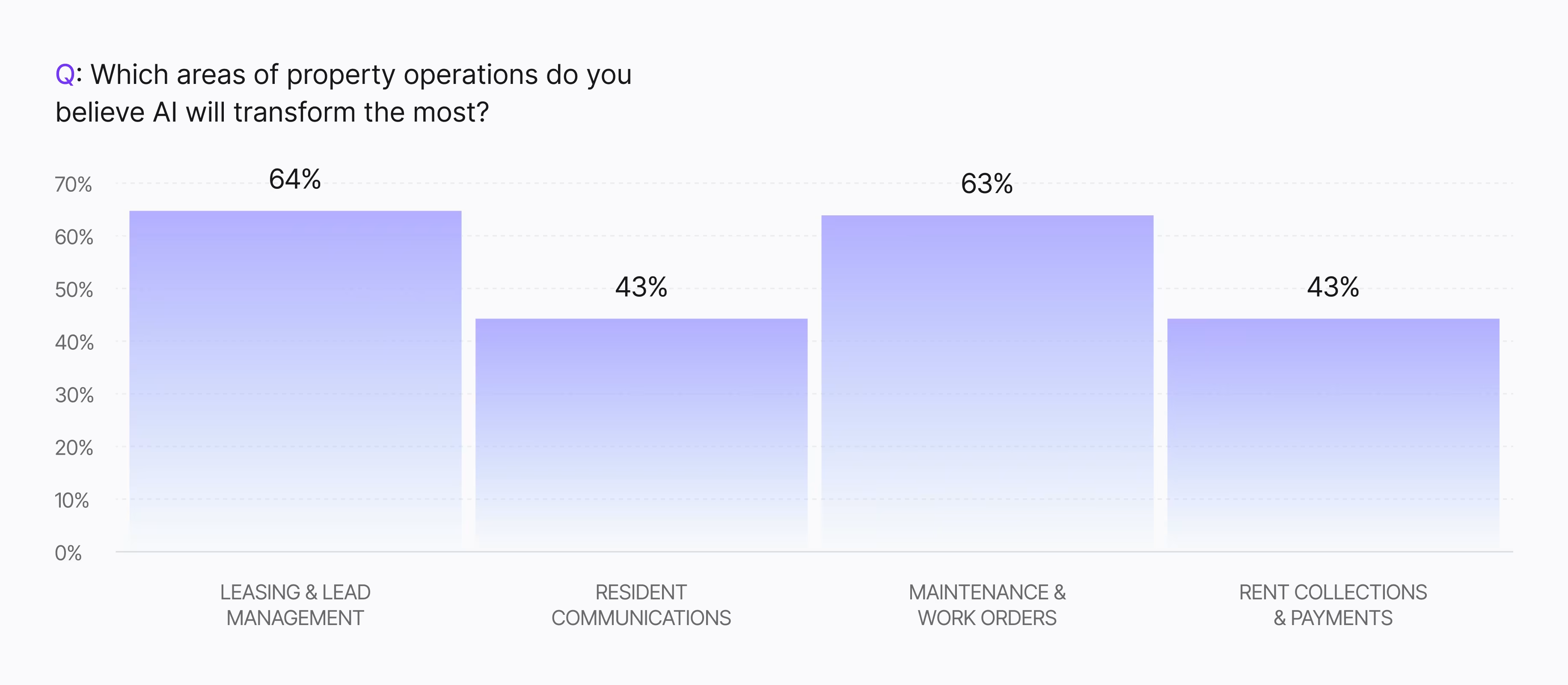
Here's what operators miss about AI adoption: the advantages compound while the disadvantages accelerate.
The 75% who automate early enter a feedback cycle that improves over time. Better lead-to-lease conversion generates more revenue. That revenue funds deeper tech investment. AI learns from every interaction, getting smarter at scale and learning the ins and outs of your brand. Our report found 77% of AI adopters already reducing operating expenses—money that gets reinvested into competitive advantages. Meanwhile, 67% of executives believe early adopters are building a permanent competitive moat.
The 25% who wait face the opposite trajectory. They're bleeding leads after hours while paying higher labor costs as 82% of their competitors use AI to replace several roles by the end 2026. They're losing deals: 78% of operators have already lost business to AI-enabled competitors. They're watching their NOI erode: 72% of executives worry slow adoption will impact profitability within two years.
The worst part? Each month of delay makes catching up harder. While the automated operators accumulate years of conversational data to train their AI, late adopters will pay premium prices for inferior solutions, desperately trying to close a gap that widens daily. By the time the 25% realize they need to act, the 75% will have already changed what residents expect from professional property management.


Three Futures for the Non-Automated

The 25% who don't automate by 2026 will follow one of three paths. None end well.
The Acquisition Targets
These operators become irresistible M&A opportunities—not for their excellence, but for their inefficiency. Tech-enabled competitors buy their portfolios at discounted valuations, automate operations, and capture immediate NOI improvements. Ownership groups, watching returns lag while competitors thrive, force these sales. Founders who spent decades building their companies watch them disappear into larger, AI-powered operations.
The Niche Survivors
Some retreat to ultra-luxury or senior housing, banking on "white glove service" to justify inefficiencies. They'll accept 30% lower margins serving the shrinking segment who actively avoids digital interaction. They'll survive by running smaller portfolios, charging lower management fees, and justifying to every ownership group why their dated approach to lead management is actually a feature, not a shortcoming.
The Slow Bleed
The remaining operators experience gradual decline. Class A properties transition to tech-forward managers. Then Class B. Labor costs climb while revenue per door drops. Eventually, facing ownership pressure and talent exodus, they'll panic, forced to pay premium prices for agentic AI automation while trying to change company culture overnight. Most won't succeed.
Let’s do a little napkin math, shall we?
The Real Cost of Waiting Another Year
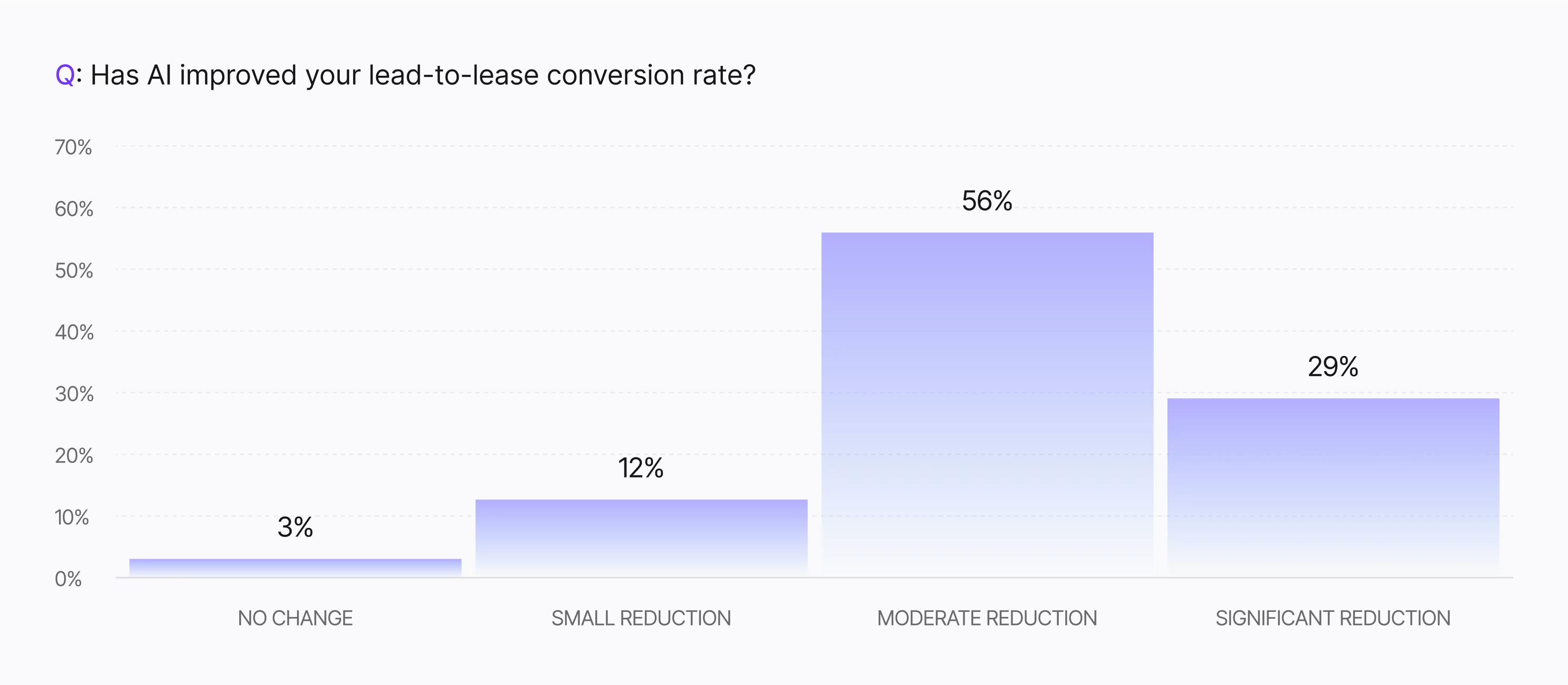
A 200-unit portfolio with 20% annual turnover missing AI's 29% conversion improvement leaves $278,400 on the table annually. That calculation assumes just $2,000 monthly rent. For Class A properties? Double it.
But revenue is only part of the equation. Our report shows 77% of AI adopters are already reducing operating expenses through automation. While they're cutting costs, the 25% are paying rising wages to compete for scarce leasing talent. The labor arbitrage alone could mean a 15-20% EBITDA swing between automated and manual operators.
The strategic costs hurt more. Late adopters will pay premium vendor prices as they lack leverage. Their best employees will leave for companies that invest in modern tools. Integration becomes exponentially complex as competitors build interconnected tech ecosystems.
Then there's the "good enough" trap. Operators waiting for perfect AI while competitors iterate and improve daily. By the time "perfect" arrives, the competition has three years of optimization, training data, and resident feedback. They've worked out the bugs you're about to discover. They've trained staff you're about to confuse. They've captured market share you're about to lose.
Every month of delay compounds these costs. The question becomes: can you afford to wait?
The 90-Day Action Plan for the Undecided
If you're in the 25%, here's your escape route.
Days 1-30: Face Reality
Audit your current lead response times. Count how many inquiries arrive after 5pm. Calculate the revenue from prospects who never got callbacks. Survey residents and ask how they prefer to communicate. The numbers will make your decision for you.
Days 31-60: Commit Resources
Allocate real budget. Our report shows 71% of operators are investing significantly in AI—you need to match or exceed them. Assign an AI champion (60% already have dedicated roles). Choose your first automation target: it should be leasing. Why? Because 64% of your competitors already started there, and prospects won't wait for you to catch up.
Days 61-90: Launch Fast, Learn Faster
Start your first pilot. Actually, start two—86% of operators we surveyed are running multiple simultaneously. Begin staff training immediately. Map integration points with your existing systems. Set aggressive timelines.
The operators who act in the next 90 days join the 75%. Those who don't become case studies in disruption.
Which story do you want to tell at the next industry conference?
The Industry Has Already Decided—Have You?
The 75/25 split we're predicting for 2026 is actually conservative. Our upcoming State of AI in Multifamily report reveals that 99% of operators are already implementing or planning AI adoption. The momentum is irreversible. This transformation mirrors every other industry disruption we've witnessed. There were retailers who embraced e-commerce and those who insisted foot traffic would return. Hotels that adopted online booking and those who trusted travel agents would endure. Taxi companies that downloaded apps and those who kept dispatchers.
We know how those stories ended.
In 2026, there will be property management companies explaining to ownership why they're ahead of the curve, showcasing automated leasing, 24/7 responsiveness, and declining cost-per-lease. And there will be companies explaining why they're behind the curve—justifying missed after-hours leads, 48-hour response times, and rising labor costs.
The data in our upcoming report makes one thing abundantly clear: the multifamily industry has already chosen AI. The operators thriving today didn't wait for permission or perfect technology. They started with pilots, learned from mistakes, and built the future their residents demanded. Which explanation will you be giving in 2026?
Stay tuned—EliseAI's State of AI in Multifamily report drops next week.