



The final session of EliseAI's Centralization Webinar Series revealed an interesting stat—seventy percent of centralization-related hiccups come from onsite team member resistance, not technology limitations. Good news—that’s why we hosted this session! We set out to tackle a key challenge every centralizing operator faces: getting teams to embrace change.
While previous sessions covered the mechanics of centralizing leasing, resident services, and maintenance, this chat focused on driving adoption and overcoming hesitation. Operators can have the best AI tools and workflows, but without team buy-in, transformation stalls.
For property management companies already dealing with staffing challenges and tighter margins, the difference between successful centralization and expensive failure often comes down to how well you manage the people side of the change—here are 6 key takeaways from our conversation.
.svg)

Takeaway One: Fail at Change Management, Fail at Centralization

Change management in property management means helping entire organizations adapt to fundamentally different ways of working. Leasing, maintenance, and accounting depend on each other, and your change management strategy must account for these connections. If you fail at effective change management, your centralization campaign will fall short as well.
The challenge intensifies in multifamily operations. Every property develops unique workflows, every regional has their own preferences, and centralization asks dozens or hundreds of people to abandon familiar routines simultaneously. Without a systematic approach to managing this transition, even the best technology deployments fail.
The data confirms this: 70% of centralization hesitations stem from onsite resistance, not technical limitations. Teams fear AI will replace them. They worry centralized specialists won't understand their property's needs. They resist changing workflows that, while inefficient, are at least familiar. These concerns require thoughtful solutions focused on people, not technology.
The key insight you need to take away from this webinar? Adoption, not deployment, determines success. You can implement sophisticated AI leasing assistants or centralized maintenance platforms, but if teams retreat to old workflows within weeks, you've achieved nothing. Change management provides the foundation that makes everything else possible.


Takeaway Two: You Have to Address the Emotional Side of Change, Not Steer Clear of It
AI and centralization trigger real fears about job security. When teams don't understand how AI will support their work, they assume it will replace them. This fear creates resistance that can derail entire centralization initiatives.
The most successful operators tackle these concerns head-on. One CEO of an operator using EliseAI told their management conference: "You won't lose your job to AI. You will lose your job to someone who works with AI because they're inherently more productive." This reframing transforms AI from threat to opportunity.
Teams that feel heard during transitions engage more fully with new processes. When leaders take time to address skepticism early, they prevent the same concerns from surfacing repeatedly throughout implementation. Ignoring these worries, however, leads to predictable problems: delayed rollouts, inconsistent adoption across properties, and higher turnover as anxious employees seek stability elsewhere.
We don’t need to beat around the bush—the property management industry faces consistent staffing challenges and high turnover. A poorly managed centralization push that increases employee anxiety only exacerbates these existing problems. But when operators position centralization as a solution to burnout rather than a headcount reduction exercise, they build trust and momentum for change.
Takeaway Three: Align and Engage All Stakeholders From Day One
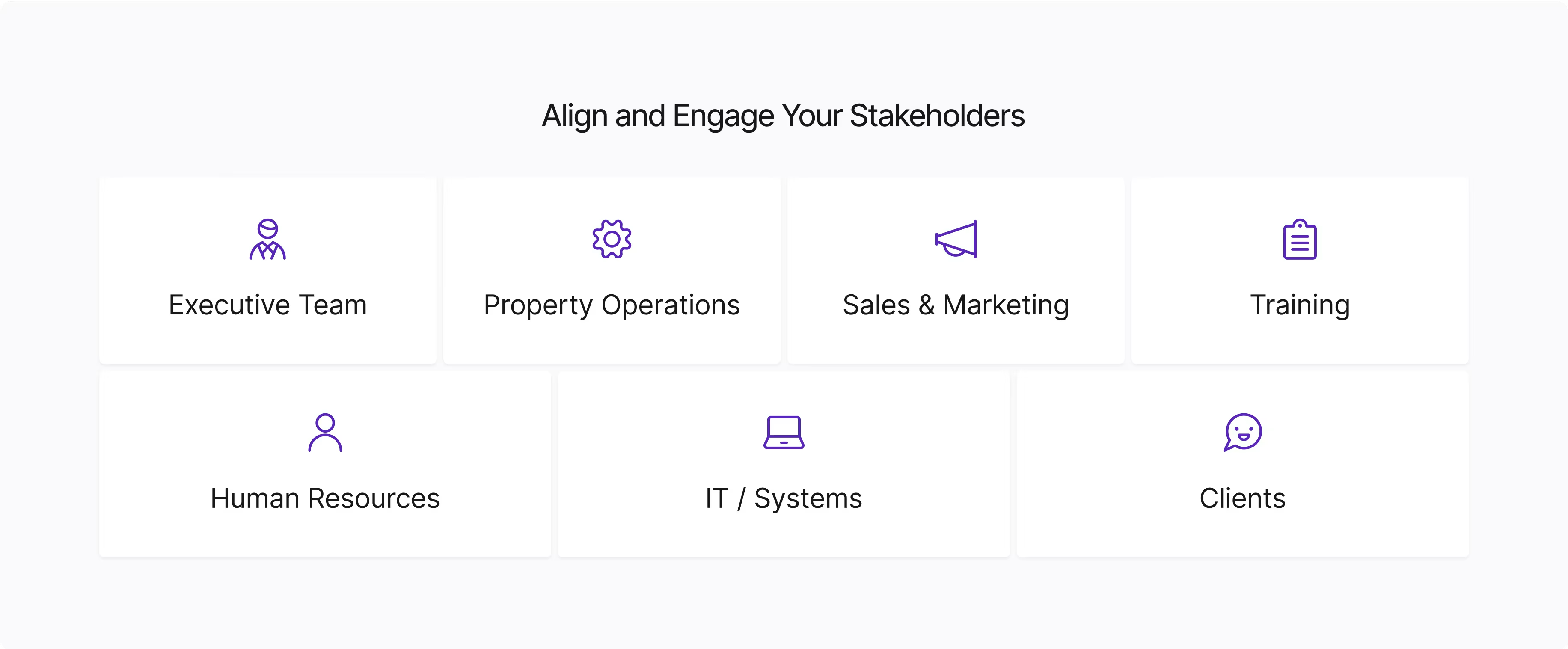
Successful centralization requires involvement from departments you might not expect. Let’s say you kick off your centralization journey with just the operations team—sounds good, right? Well, you’re going to hit roadblocks when accounting needs new GL codes for billing back centralized services to owners, or when IT hasn't prepared systems for remote access. TL;DR? Every department needs a seat at the table from the beginning.
How can you create interdepartmental cohesion during change? The best executives start by explaining the why, addressing shrinking margins or staffing challenges that make the current model unsustainable. Great department leaders translate this into the what—how their teams will support the new structure and what changes to expect. Sharp regionals and onsite managers focus on the how—outlining specific workflow changes and daily impact on their properties.
This cascading communication ensures teams receive consistent messaging while getting the detail appropriate to their role. An onsite leasing agent doesn't need to understand portfolio-wide NOI targets, but they do need to know exactly how lead handoffs will work with the new centralized team. Meanwhile, accounting needs to understand both the financial goals and the mechanical changes to their processes.
Bring more people to the table than seems necessary. Early involvement prevents surprise roadblocks and builds organization-wide buy-in. When everyone understands the plan from day one, implementation is much smoother.
Takeaway Four: Define Success Metrics Beyond Payroll Savings
Many operators fixate on payroll savings as their primary centralization metric, but this narrow focus misses larger opportunities. It’s key to track operational improvements like payment velocity, lead-to-lease conversion rates, renewal percentages, and critically, onsite team turnover, to truly grasp the impact of centralization.
When I was at Cardinal Group Companies but before I implemented EliseAI, I could track what tasks our teams completed but not how long those tasks took. Once centralization began and we stood up EliseAI, new metrics emerged: response time to prospects, time to process applications, hours spent on routine communications. These efficiency measurements became KPIs that demonstrated value beyond simple payroll savings.
Another side effect of this change is that legacy incentive structures fail to meet changing standards. If you have incentive structures that reward individual performance, they can conflict with centralization's team-based approach. A leasing agent compensated purely on personal lease signings has little motivation to ensure smooth handoffs to centralized specialists. Successful operators redesign compensation to reward collaboration alongside individual achievement.
Importantly, you should stay flexible with your metrics. As your operating model evolves, you'll discover important measurements you hadn't considered. Maybe resident satisfaction scores improve because onsite teams have more time for in-person interactions. Perhaps maintenance response times drop because centralized coordinators optimize technician routing. Build in regular reviews to capture these unexpected wins and adjust your success criteria accordingly.
Takeaway Five: Create a Structured Communication Plan With Tailored Messaging
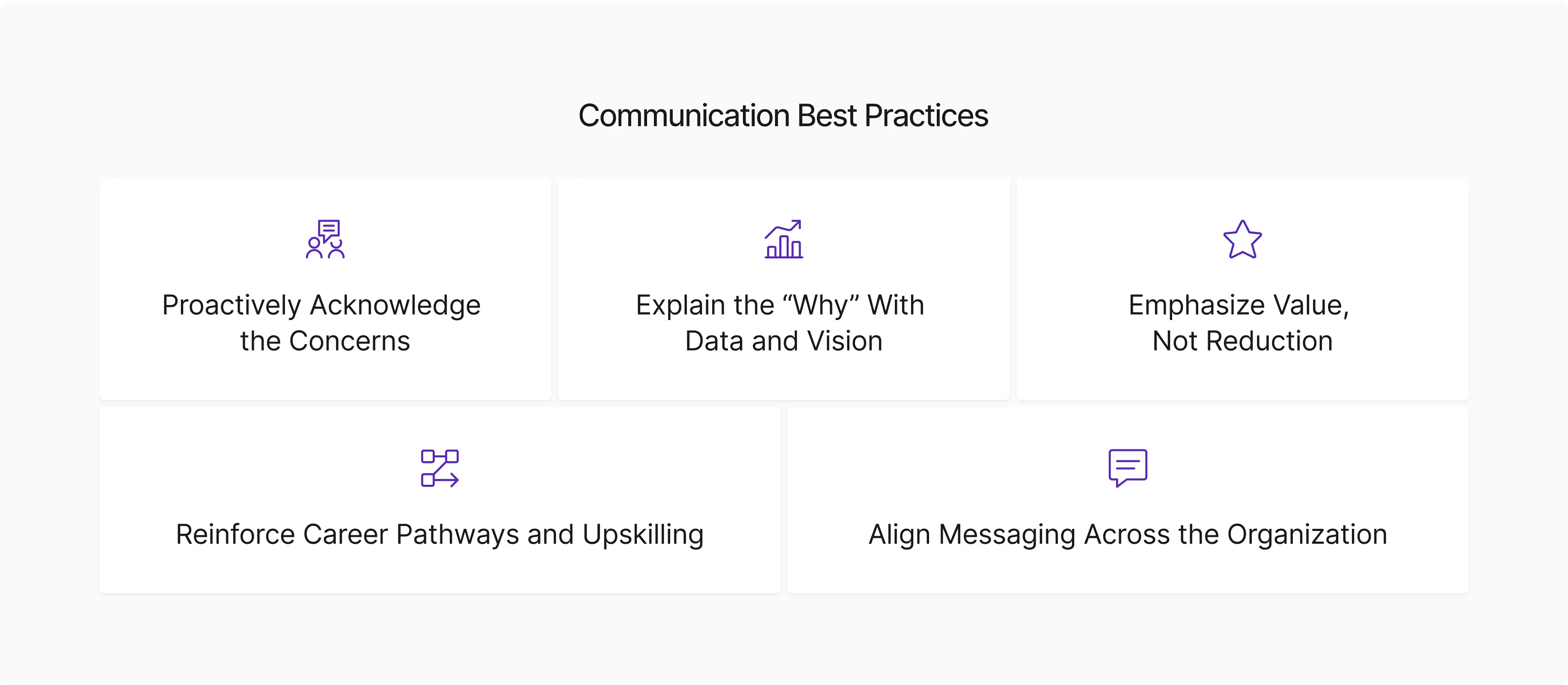
Different audiences need different messages about centralization. Avoid a “one-size-fits-all” email blast—you’ll only create confusion and panic. Instead, tailor your communication strategy to each group's specific concerns and information needs.
For executives, focus on strategic context and ROI projections. For department leaders, provide operational details about workflow changes and resource allocation. For onsite teams, deliver specific, practical information about their daily responsibilities and how to access support. Keep sensitive details—like specific headcount reductions—limited to appropriate leadership levels while being transparent about the overall direction and objectives of the project.
At Cardinal, I personally conducted 35 lunch-and-learns in one year for our onsite teams. You have to take it on yourself if you want to get things done right. If you're leading centralization and waiting for the training department to handle communication, you will fail. The person driving centralization must own the communication plan completely, from crafting executive messages to conducting those frontline training sessions—trust me, I’ve seen it first hand.
Takeaway Six: Position Centralization as Career Development, Not Job Elimination
Let’s be honest for a second: the traditional property management career path makes very little sense. Why should a sociable, sales-oriented leasing agent's next role be assistant manager, where they'll spend their days locked in an office doing financials? Corporate teams separate marketing from accounting for good reason—these roles require different skills and personalities. Key takeaway? Centralization offers a chance to create more logical career progressions.
Smart operators frame centralization as an expansion of career options. That assistant manager who excels at numbers but dreads resident confrontations can become a centralized accounts specialist. The leasing agent who loves nurturing leads but hates property-specific administrative work can join a centralized leasing team.
Incentivize your team to buy-in by giving early adopters first looks for leadership roles. The first specialists who take the plunge become the natural candidates for team lead positions. Brittany Keeler, who we chatted with in our “Centralizing Resident Communications” webinar, exemplifies this trajectory perfectly. She was the second centralized specialist I brought on at Cardinal Group, and quickly became our first centralized manager.
We all know the feeling—most properties already operate short-staffed with multiple open positions. Rather than framing centralization as role elimination, successful operators position it as building a sustainable model around the staffing levels they can actually achieve. When teams understand centralization addresses burnout rather than creates unemployment, resistance transforms into interest.
What's Next in Your Centralization Journey
The change management framework we shared in this session boils down to essentials: align stakeholders, define meaningful KPIs, tailor your communications, prepare for predictable objections, and maintain engagement after launch. Simple, right? Well… maybe not quite simple—but that’s what we’re here for.
EliseAI provides communication templates and planning resources for each phase, developed from implementations across hundreds of properties. Ready to build your change management strategy with a little help from us? Get in touch with us via the form below.