


.png)
Maintenance has always been one of the most complex and expensive areas of property management. With annual costs averaging $2,000 per unit, operators are under pressure to find efficiencies without sacrificing service. Since maintenance support often requires onsite work, opportunities to centralize have historically been limited. But new technologies supporting both resident communications and technician management are creating opportunities for management companies to rethink their maintenance staffing.
In our latest Centralization Webinar Series session, we explored how centralizing maintenance can improve resident communication, optimize technician performance, and unlock cost savings. We were joined by Carlos Castillo, Corporate Trainer at Villa Serena Communities, who shared firsthand how his teams are adopting new technology and training strategies to make maintenance more efficient.
Here’s what stood out.
.svg)

Takeaway One: Maintenance Centralization Addresses One of the Industry’s Largest Cost Centers
Maintenance often accounts for 15–30% of a property’s annual budget, yet inefficiencies remain common. Work orders are still categorized by residents, supervisors are handing out paper assignments, and technicians often close out tasks before fully recording them.
These outdated workflows lead to inconsistent data, unreliable reporting, and poor use of staff time. By centralizing oversight, operators can standardize processes, create better accountability, and ensure resources are being deployed strategically. The shift from property-level supervision to a regional model mirrors the evolution already seen in operations: fewer supervisors managing larger teams with clearer oversight. This approach reduces costs while aligning service delivery across the portfolio.


Takeaway Two: AI Improves the Resident Experience from the Very First Work Order
Leaving work order categorization in the hands of residents often results in inaccurate or incomplete requests. By using AI to manage intake, operators can ensure issues are triaged correctly, ask clarifying questions, and even request photos or videos to better inform the technician before arriving on site.
AI can also de-escalate emergencies, offer self-help instructions, or block unsupported requests - such as mounting in-unit TVs - before they ever reach the team. Student Quarters provides a powerful example, reducing 26% of after-hours emergency calls with AI and saving more than $27,000 in overtime maintenance payroll. These tools create faster, more accurate communication while giving residents an experience that mirrors the transparency and reliability they expect from modern service providers like Amazon or DoorDash.
Takeaway Three: Technician Coordination Requires Purpose-Built Tools
Technicians face unique challenges compared to office staff. They are on the go, all day, every day, but are expected to make updates in systems designed for office team members who have regular access to their computers. A centralized maintenance model requires mobile-first tools built specifically for fieldwork. Features like auto-scheduling based on skills, live GPS mapping, and in-app time tracking allow supervisors to assign work more effectively while providing oversight into technician performance.
Villa Serena, for example, now tracks in real time where technicians are, how long they’ve been on a task, and when they clock in and out. This visibility allows supervisors to function more like regional managers overseeing teams across communities. The result is a smoother day for technicians, fewer inefficiencies, and higher retention as the role becomes more manageable.
Takeaway Four: Centralized Models Unlock New Staffing and Performance Management Opportunities
Moving to a centralized model allows operators to rethink staffing in ways that create both savings and performance gains. A regional maintenance supervisor can manage up to 10 technicians, consolidating higher-cost leadership roles while still improving oversight. Centralization also creates new data streams, enabling operators to track metrics like resolution times, skill-based efficiency, and resident satisfaction.
This data supports both better performance management and career development for technicians, who can specialize in areas like plumbing, HVAC, or electrical rather than being stretched thin as generalists. Supervisors can assign work to the best-qualified technician, ensuring faster service and fewer repeat visits. Over time, this model builds stronger teams, happier residents, and improved NOI.
Takeaway Five: Lessons Learned from Villa Serena Communities
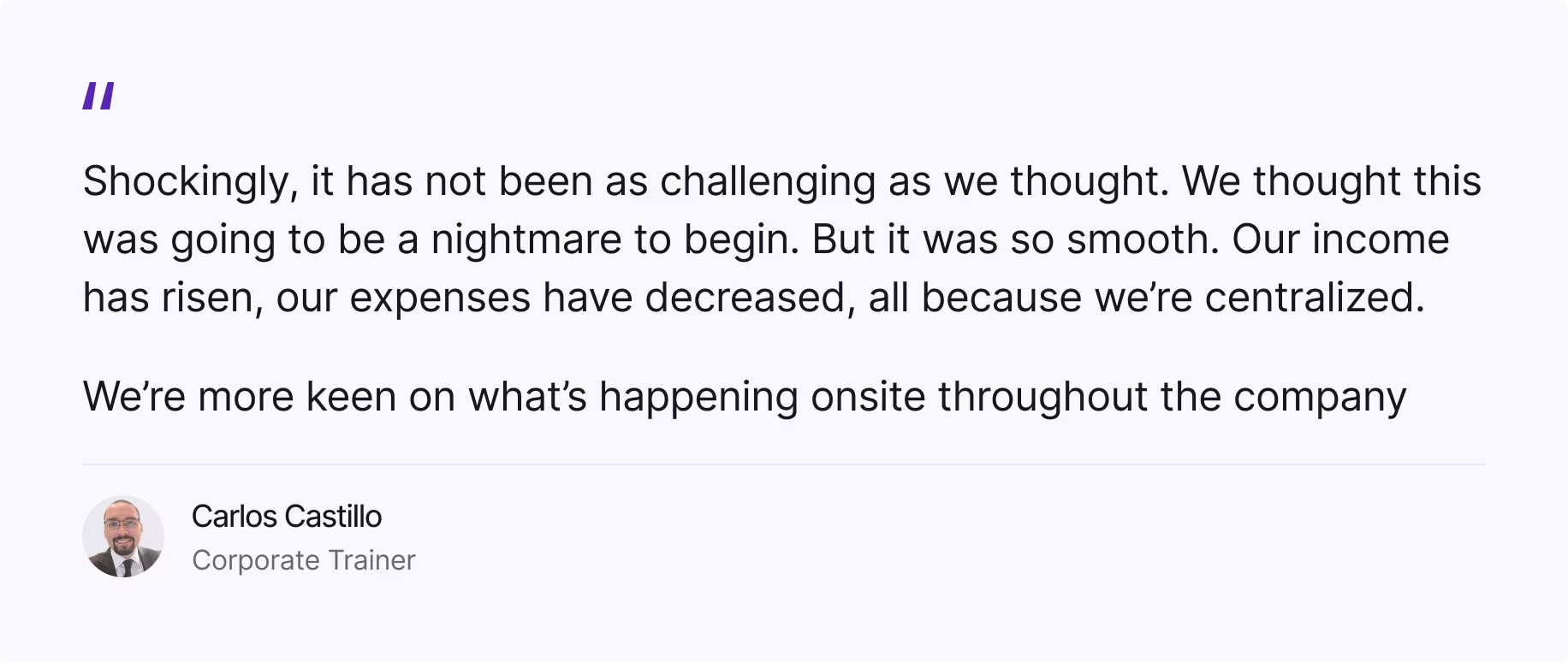
Carlos Castillo has helped Villa Serena lead the shift to centralized maintenance by focusing on training, coaching, and open communication. His approach highlights the importance of framing new technology as a solution to technicians’ existing frustrations - like waiting for supervisors, unclear scheduling, or incomplete communication - rather than as just “another tool.” Villa Serena now benefits from real-time visibility into technician activity across properties, giving supervisors the oversight they need while freeing technicians to focus on completing work efficiently.
As a Corporate Trainer, Carlos is involved in both the training of new technologies and the performance management tracking that follows a new technology rollout. He stressed the importance of transparency and listening to frontline staff: “Definitely involve the team… that’s one of the biggest things, is being transparent, opening up the floor and answering, ‘What are we trying to solve by doing this?’”
What’s Next in the Series
This session closed out our focus on specialized roles and teams across leasing, resident services, and maintenance. In the weeks ahead, we’ll turn to higher-level considerations, including:
- Building and managing a centralized technology stack
- Structuring build-backs and revenue models for centralized services
- Leading effective change management strategies
In upcoming sessions we’ll be joined by Michele Crochetiere from One11Advisors and Hope Dunleavy from Real Foundations as we wrap up our webinar series ahead of the EliseAI Centralization Summit in Dallas, Texas on September 25th.
We hope you’ll join us to continue the conversation in-person!