


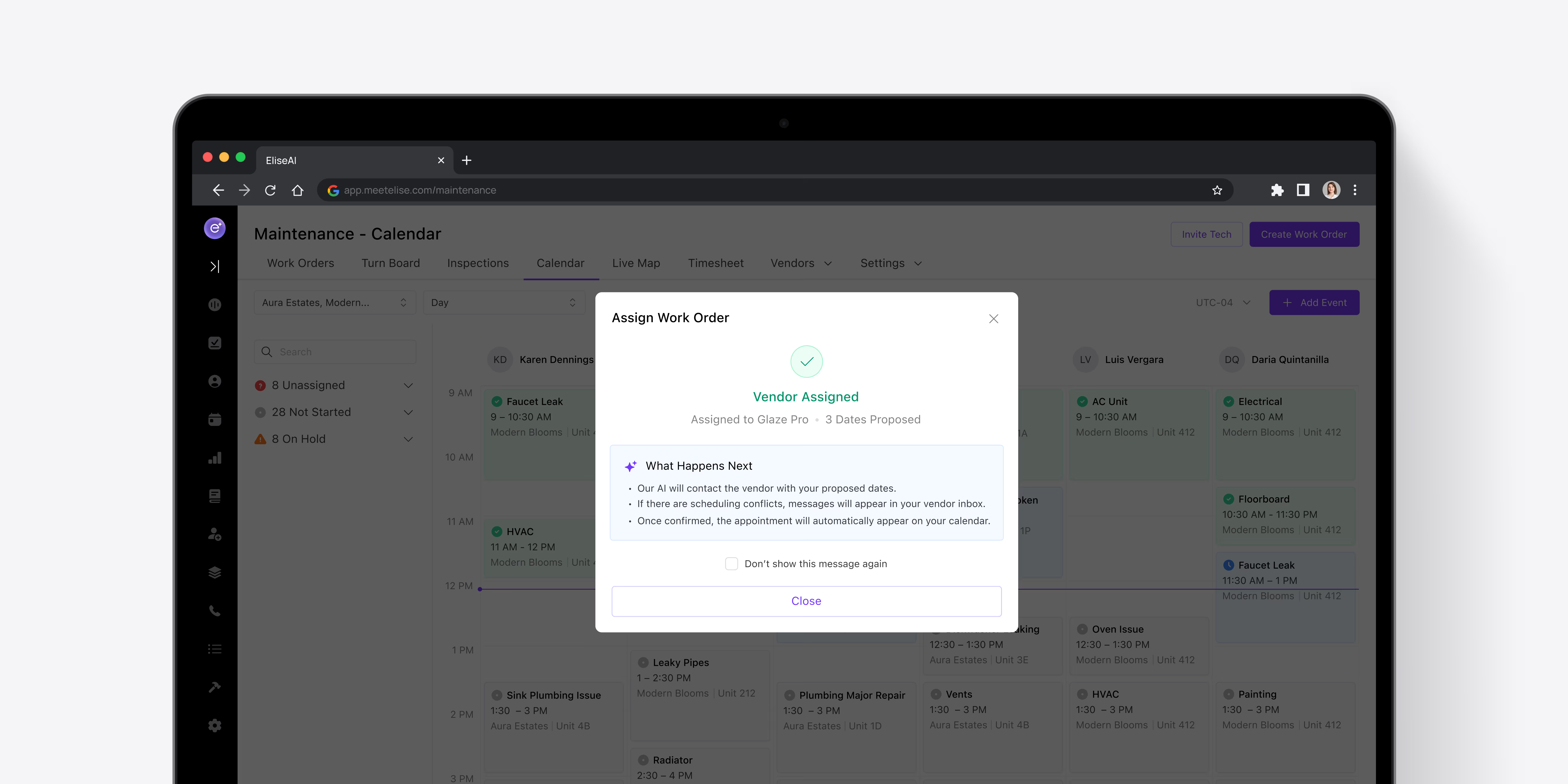
Purpose-built CRMs for multifamily real estate centralize leasing, resident communications, and portfolio analytics—leveraging AI and integrations to accelerate lead-to-lease conversion, improve resident engagement, and reduce operational costs across properties.
Let's dive in further.
.svg)

Introduction to Purpose-Built CRMs in Multifamily Real Estate
A purpose-built CRM is software engineered for multifamily property operations that combines lead management, leasing workflows, resident communications, and portfolio analytics to replace generic sales CRMs and reduce manual coordination across teams.
The industry has reached an inflection point: evolving tenant expectations and competitive pressure make traditional property management approaches insufficient. Purpose-built CRMs address the complexities of multi-property portfolios, diverse unit types, and long leasing cycles that generic business software cannot manage effectively.
This guide covers four core areas for multifamily operators:
- Market trends driving CRM adoption and competitive urgency
- Core features that differentiate purpose-built solutions
- Integration strategies to maximize efficiency and ROI
- Practical evaluation frameworks for vendor selection
Leading platforms like EliseCRM illustrate how AI-native solutions centralize operations and improve lead-to-lease conversion and resident satisfaction. See a feature deep dive for specifics like automated lead routing, intelligent nurture sequences, and PMS integration.


Key Trends Driving CRM Adoption in Multifamily Housing
The shift toward purpose-built, AI-powered CRMs is driven by converging market forces reshaping competition and resident expectations. By 2025, AI adoption in multifamily property management has reached critical mass, and 77% of operators using AI report moderate to significant operating expense reductions.
- Widespread AI and automation: Fast, intelligent lead response and automated nurture sequences are table stakes; properties without them lose responsiveness.
- Measurement-first decision making: Operators demand clear attribution from marketing spend to signed leases; 85% report measurable lead-to-lease improvements from AI.
- Shifting tenant expectations: Renters expect instant, personalized, digital experiences for leasing and residency.
- Competitive displacement: 78% of operators reported losing prospects to AI-enabled competitors, heightening urgency for adoption.
Strategically, 89% of companies plan to include AI in their long-term plans, turning CRM choice into a competitive advantage rather than a short-term upgrade.
Essential Features of Purpose-Built Multifamily CRMs
Lead-to-lease conversion—the percent of inquiries that sign a lease—is the core metric for CRM ROI, measuring outreach, follow-up, and leasing workflow effectiveness. Optimizing this metric is critical: 85% of property managers report AI-driven conversion improvements.
Core Feature Checklist
- Built-in property and unit database with inventory syncing to PMS to prevent outdated listings and double bookings.
- Automated lead routing, nurture sequences, and two-way SMS/email templates for instant response and consistent follow-up.
- Customizable workflows and task queues for onsite and central teams to ensure leads are handled consistently.
- Reporting and dashboards for lead sources, conversion funnels, and occupancy forecasting to optimize marketing spend.
- Integrations with PMS, marketing platforms, e-signature, and screening tools plus open APIs to eliminate duplicate entry and support automation.
Advanced capabilities include predictive analytics, intelligent lead scoring, and more; the EliseCRM feature set shows how these fit into unified leasing and resident workflows.
How Purpose-Built CRMs Enhance Leasing and Tenant Engagement
Purpose-built CRMs transform the resident lifecycle with automation and personalized communications, delivering measurable improvements in efficiency and satisfaction.
Optimized Leasing Workflow
- Lead capture and automatic qualification: routes inquiries by property, budget, and timing while tracking source attribution.
- AI-enabled nurture and rapid responses: personalized SMS and email sequences engage prospects within minutes.
- Scheduled tours, e-signature, and move-in automation: integrated booking and digital lease execution streamline conversion.
- Resident onboarding and ongoing engagement: automated sequences smooth transitions and support retention.
These workflows drive measurable benefits—77% of AI-using operators report operating expense reductions, and 85% cite improved lead-to-lease conversion.
Advanced Resident Engagement
CRMs extend beyond leasing to ongoing resident relationships through targeted communications and service automation: automated amenity sign-ups, maintenance triage, and renewal outreach powered by predictive analytics. Personalization and proactive engagement increase satisfaction and retention while reducing manual work.
Integration and Automation Benefits for Multifamily Operators
Effective CRM implementation hinges on seamless integration with PMS and marketing platforms; benefits span lead management, centralized data, and automated workflows.
Strategic Integration Patterns
- Centralized data architecture eliminates duplicate work and improves accuracy across leasing and accounting.
- Automated response and nurture systems speed responses and boost occupancy and retention.
- Marketing attribution and optimization provide precise measurement for reallocating ad spend to high-performing channels. See broader trends in real estate operations automation.
Integration Readiness Checklist
Validate these capabilities during vendor demos:
- Two-way PMS sync for inventory, move-ins/move-outs, and resident records.
- Marketing attribution and lead-source capture for accurate channel performance.
- API latency and error-handling tests to ensure reliability during peak leasing.
Find detailed integration guides and best practices at the EliseCRM resource center.
Overcoming Challenges with Tailored CRM Solutions
Adoption barriers exist, but strategic planning and phased rollouts mitigate risk and maximize ROI.
Common Implementation Challenges
- Economic uncertainty and budget scrutiny: address with phased rollouts and pilot properties to prove value incrementally.
- Changing tenant preferences: use segmented nurture campaigns and preference tracking to personalize outreach.
- Regulatory and compliance concerns: require vendor documentation for data residency, consent management, and audit trails.
These issues complicate adoption, but don’t negate the long-term benefits.
90-Day Adoption Playbook
- Days 0–30: Data audit and core integration testing—inventory systems, assess data quality, validate PMS and marketing connections.
- Days 30–60: Workflow configuration and pilot launch—set up nurture sequences, routing rules, and dashboards for a pilot region.
- Days 60–90: Performance measurement and scale preparation—analyze pilot KPIs, refine workflows, and plan wider rollout.
Success Metrics Dashboard
Track KPIs to measure CRM impact:
- Lead response time (target: under 5 minutes)
- Lead-to-lease conversion rate (benchmark vs. pre-CRM)
- Renewal rate improvement
- Cost per lease (marketing + operations)
- Team productivity (leads per person, administrative time saved)
Evaluating and Selecting the Right CRM for Your Multifamily Portfolio
A structured evaluation balances immediate operational needs with long-term strategy; vendor selection determines how effectively a CRM will scale with your business.
Vendor Type Considerations
- Purpose-built multifamily CRMs: industry-specific workflows and deep integrations with potentially higher initial costs but better long-term ROI.
- Generalized CRMs with vertical add-ons: lower entry costs and familiar UI but often require extensive customization and may lack deep PMS integration.
- Pricing models: SaaS offers predictable monthly costs and regular updates; enterprise contracts provide customization and dedicated support at higher upfront cost.
Decision Framework by Portfolio Size
- Under 100 units: prioritize ease of use, quick implementation, and PMS integration.
- 100–1000 units: focus on automation, multi-property reporting, centralized lead management.
- 1000+ units: require enterprise security, advanced analytics, API flexibility, and dedicated support.
Negotiation and Contract Considerations
- Define pilot KPIs and success metrics upfront to trigger rollouts or contract changes.
- Use phased payments tied to milestones and performance.
- Request success-based SLAs for uptime, support response, and integration performance.
- Set clear onboarding milestones with penalties for missed deliverables.
Real-world examples: Haley Residential transformed their centralized operations with EliseCRM and Blanton Turner centralized with EliseCRM's AI-first approach.
The Future of CRM Technology in Multifamily Real Estate
CRM technology is evolving from lead and leasing automation into comprehensive operating platforms that optimize property management using AI and richer integrations.
Emerging Technological Capabilities
- Advanced AI assistants will handle complex leasing conversations, resident requests, and maintenance coordination with growing accuracy and personalization.
- Predictive analytics for churn and pricing will identify at-risk residents and inform dynamic pricing using market and portfolio data.
- Deeper back-office automation will integrate accounting, vendor management, and compliance reporting to reduce manual intervention.
Given that 89% of companies plan to include AI in strategic plans, investing in AI-native platforms is increasingly essential for competitiveness.
Strategic Technology Roadmap
- Short-term (0–12 months): automate lead response and establish core PMS and marketing integrations for immediate ROI.
- Mid-term (12–36 months): deploy predictive retention analytics, dynamic pricing, and portfolio-level insights to inform strategy.
- Long-term (36+ months): transition to outcome-based vendor contracts and AI-driven resource allocation that optimizes staffing, marketing, and capital spend.
Preparing for Industry Transformation
Evaluate vendors on AI roadmap, ecosystem integrations, and willingness to pursue outcome-based partnerships. Platforms that pair continuous innovation with integration depth and operational reliability will offer sustainable advantages. See the EliseCRM platform as an example of an AI-native architecture designed for evolving needs.
Frequently Asked Questions
What defines a purpose-built CRM for multifamily real estate?
A purpose-built CRM is designed for multifamily workflows—managing units, leads, leases, and resident communications—rather than generic sales processes, enabling centralized leasing and resident engagement at scale.
How do multifamily CRMs improve leasing velocity and occupant retention?
They automate lead follow-up, personalize communications, and streamline lease execution to shorten leasing cycles and boost tenant satisfaction, increasing conversion and retention.
Which CRM features offer the most impact on operational efficiency?
Automated lead routing and nurturing, two-way SMS/email, PMS integrations, and real-time dashboards typically yield the largest efficiency gains by removing manual tasks and preventing missed prospects.
How can these CRMs integrate with existing property management systems?
Modern CRMs use two-way APIs and prebuilt connectors to sync inventory, move-ins/move-outs, and tenant records with PMSs, enabling single-source data and automated workflows.
What should multifamily operators consider to maximize CRM ROI?
Focus on integration readiness, measurable pilot KPIs (lead-to-lease and response time), change management, and vendor support quality, and use phased rollouts with clear performance metrics to validate investment.