


Jay Parsons said it better than we ever could—he’s never seen “such long-term bullishness coupled with so much short term nervousness” in the multifamily industry. While there are exciting macroeconomic trends emerging—high apartment demand, low turnover, improving affordability measures—there are just as many, if not more, headwinds to be nervous about, including a hyper competitive leasing environment, flat rent growth, and a glut of supply around the country. Long story short, it’s never been tougher to fill units than today—particularly at older, B and C class assets contending with new supply coming online.
Today, the multifamily industry is facing what we’ve termed the “vacancy risk multiplier." In the contemporary economic climate, each vacancy carries exponentially higher risk to the bottom line due to new supply hitting the market, rent compression, and the need for competitive discounting to fill units. We’ve hit a four decade peak in apartment supply, and it’s compressing NOI at operators large and small—making empty units a bigger problem than ever. That’s why REITs like AvalonBay, Equity Residential, IRT, and more are laser focused on resident retention, driving turnover rates down to an all time low figure in 2025.
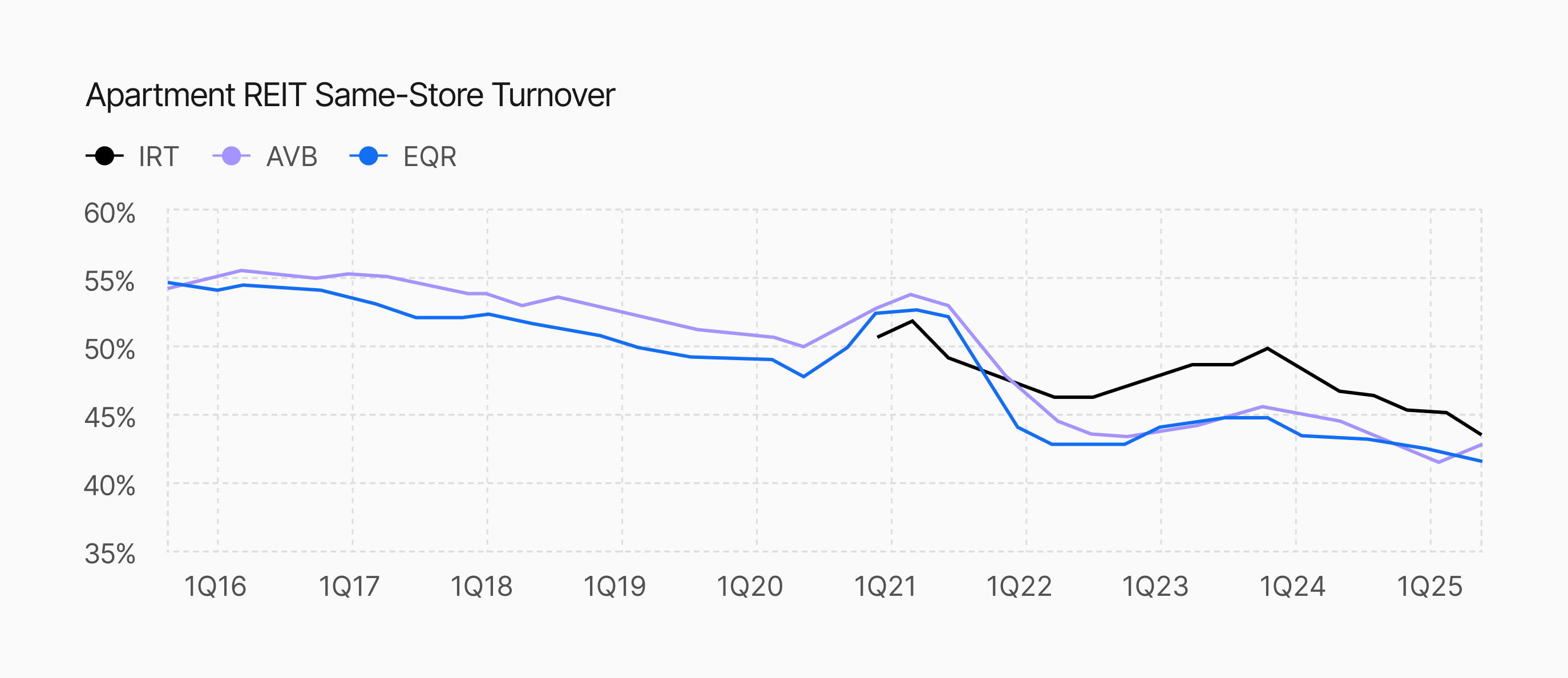
Another key similarity between those REITs? They’re heavily invested in deploying technology to improve the resident experience and keep vacancy loss low—including all three of them using EliseAI.
But first, let’s pull back and examine the “perfect storm” multifamily operators are facing.
.svg)

The Perfect Storm: Why Traditional Leasing Approaches No Longer Pay the Bills
The status quo works until it doesn’t. Today, we’re hitting the point where the leasing status quo is no longer serving the needs of either operators or prospects. As Jay highlighted, operators are staring down serious supply-side pressure, resulting in an all time high for leasing competition despite supply delivery sliding into the rearview mirror. Operators have also have a demand distribution problem: net absorption of new units is strong, but this demand is flowing to new properties. As these new build lease-ups pull more renters away from existing supply, there’s a domino effect that causes compression in rent costs at older, less premier assets. Finally, region-by-region challenges, including overbuilding in the Sun Belt, slow recovery from COVID-induced malaise on the West Coast, and tepid rent growth in the Mountain West Region are all forcing operators to rethink what they know about filling units.
The modern renter also is more demanding than ever before, conditioned by frictionless online shopping experiences and instant gratification from apps like Amazon Prime, Netflix, and Uber. Changing consumer behavior—with an increased focus on self-serve buyer journeys, late night response expectations, and hyper-person—has rendered the traditional 9 to 5, Monday through Friday leasing office schedule a relic of the past. Operators need to skate to the puck and get ahead of where consumer behaviors are going, rather than trying to catch up. In the context of revenue compression, this is even more crucial—and it’s where EliseAI comes in.


EliseAI: A Strategic Response to Market Dynamics
The multifamily industry's current headwinds demand precision and customization at scale—something traditional leasing approaches simply can't deliver. Fortunately, EliseAI's conversational AI platform can, helping operators win across a few key focus areas: speed to reply, 24/7 coverage, personalization at scale, and data-driven optimization.
Speed Wins
When prospects have more options than ever before, response time becomes THE determining factor. A prospect won’t wait for 72 hours to set up a tour at your communities—they’ll already have toured the community down the block that booked their tour at 3:32am with EliseAI. In markets where brand-new lease-ups are offering aggressive concessions and premium amenities, established properties can't afford to lose prospects to slow response times. EliseAI ensures that every inquiry receives immediate, personalized attention, mapping to consumer behavior changes and ensuring your communities stay top of mind with prospects.
24 Hour Demand Needs 24 Hour Coverage
Parsons noted in his piece that while net absorption remains strong, much of that demand flows to newly built properties. EliseAI helps stabilized properties compete by being available when prospects are actively searching—searches that increasingly happen outside traditional business hours. The platform maintains consistent engagement quality whether it's the first inquiry of the day or the hundredth, ensuring no lead falls through the cracks during peak activity periods.
Personalization First
Today's renters are going to compare every interaction they have at your communities with the polished experience they receive at new lease-ups. How can you stay ahead of that curve? EliseAI. EliseAI delivers personalized interactions that adapt to each prospect's specific needs, timeline, and preferences. The platform learns from every conversation, continuously improving its ability to qualify leads, address concerns, and guide prospects toward scheduling tours, all while maintaining the human touch that drives conversion.
Data-Driven Optimization
In Parsons' eyes, operators are going to be under more scrutiny than ever, driving an increased need to understand exactly which strategies drive results. EliseAI provides granular insights into lead behavior, conversion patterns, and market response rates, crucial data for making informed decisions about pricing, concessions, and marketing spend.
The Retention Multiplier: Protecting Your Existing Revenue
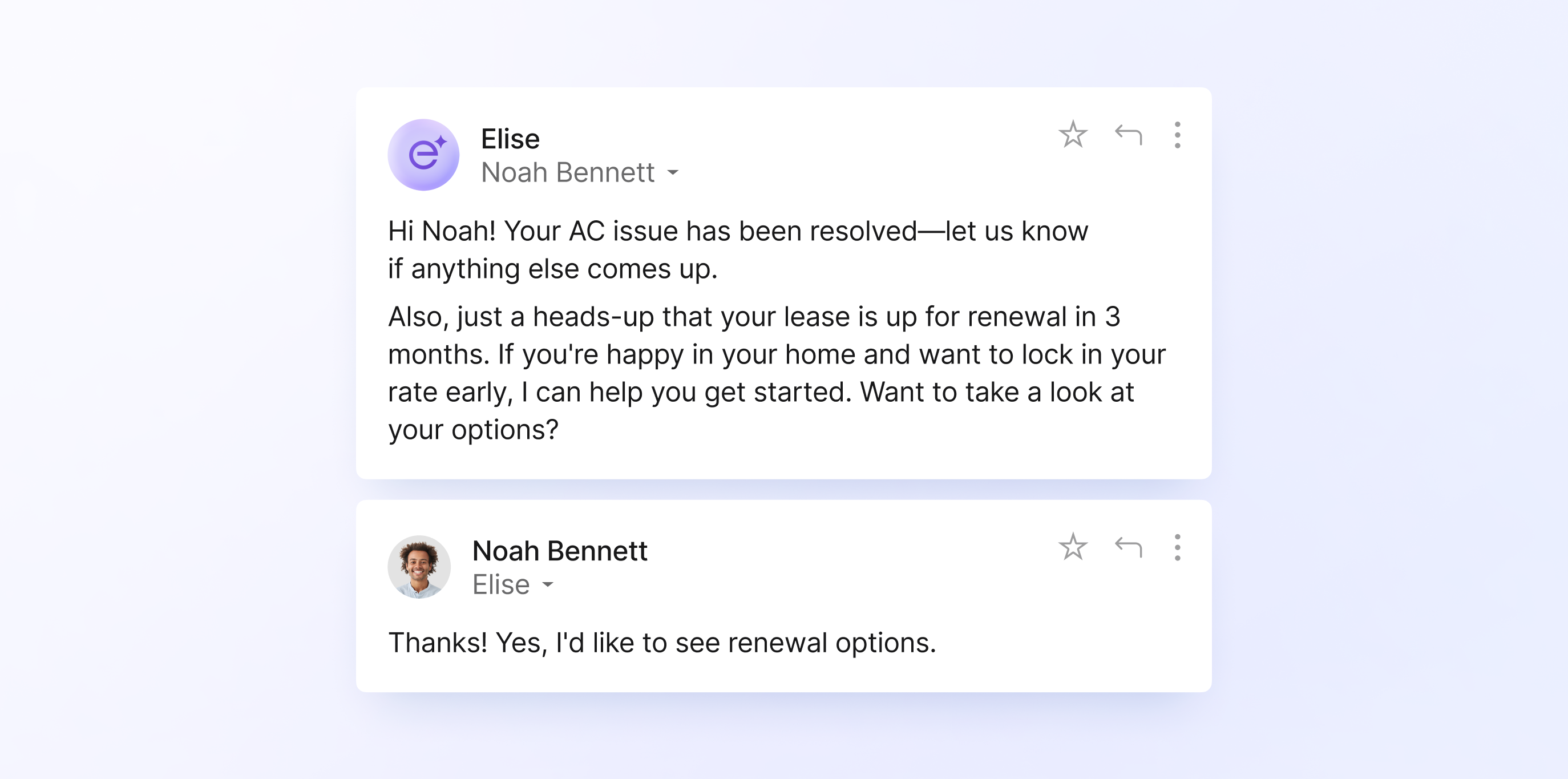
In his report, Parsons emphasizes the critical importance of "protecting the backdoor"—retaining existing residents who might otherwise add to the competitive churn affecting stabilized properties. EliseAI's resident retention capabilities transform this defensive strategy into a proactive revenue protection system.
Rather than waiting for residents to express dissatisfaction or give notice, EliseAI initiates strategic touchpoints throughout the lease cycle. The platform identifies optimal moments for engagement—such as lease renewal windows, maintenance follow-ups, or community event invitations—ensuring residents feel valued and connected to their community. This proactive approach directly addresses Parsons' observation that operators must give existing residents "every reason to want to stay put."
Plus, EliseAI handles routine resident communications, service requests, and community updates without requiring additional staff hours. This addresses the expense pressure challenge Parsons identifies—operators can improve resident experience while controlling payroll costs. EliseAI manages everything from maintenance scheduling to amenity reservations, creating a premium service experience that rivals what residents might find at competing properties. That creates real ROI: you avoid turn costs (which average out to roughly $3,000-$5,000 per unit), eliminate vacancy periods, and maintain consistent rental income.
Finally, EliseAI tracks resident satisfaction indicators and engagement patterns to predict renewal likelihood. This early warning system allows property teams to intervene with targeted retention offers or service improvements before residents begin seriously considering alternatives. The platform's analytics help operators understand which residents are at highest risk and what interventions are most effective—crucial intelligence in a market where every day of vacancy loss hurts.
What Costs More: EliseAI, or Inaction?
In a world where operators are scratching and clawing for every competitive advantage to overcome macroeconomic headwinds, AI quickly rises to the top of the pile. We have the data to prove it—operators using EliseAI boost occupancy rates by 2% against competitors, drive measurable increases to resident satisfaction, and cut delinquency rates by 80bps on average. The numerical results couldn’t be clearer: EliseAI is the competitive edge you need to stay ahead in a climate of compressed NOI.
Check out Jay Parsons’ full whitepaper at the link here, and get in touch with us below to learn more about protecting your NOI with EliseAI.