


.png)
EliseAI team members have thousands of conversations per week with real operators about the impact of AI on multifamily. Most of these calls contain the same question, every single time: "What does EliseAI cost?"
It's a fair question. But it's also the wrong one.
The question you should be asking? "What is the AI-free status quo already costing me?"
Because the reality is, most multifamily portfolios are bleeding revenue in ways that don't show up on a single, nicely formatted per-unit per-month line item like software costs do. Those hidden revenue leaks could be…
- The leads that go cold because no one followed up with that10pm inquiry until the next morning (or didn’t at all)
- Mediocre collections rates because outreach to delinquent residents is sloppy (if it happens at all).Revenue leakage from uncollected rent has an immediate impact on margins.
- Vacancy loss that stacks up because your leasing team is stretched too thin to respond before prospects have booked tours at the AI-powered community down the street
None of these show up as "cost of not having AI" in your budget. But they're real, and they're compounding.
We decided to illustrate some of these potential leakages across a simulated 5,000-unit portfolio with an average rental rate of $1,500 per month, with EliseAI data from internal benchmarks and external surveys (like the one we published with our friends over at ALN Apartment Data).
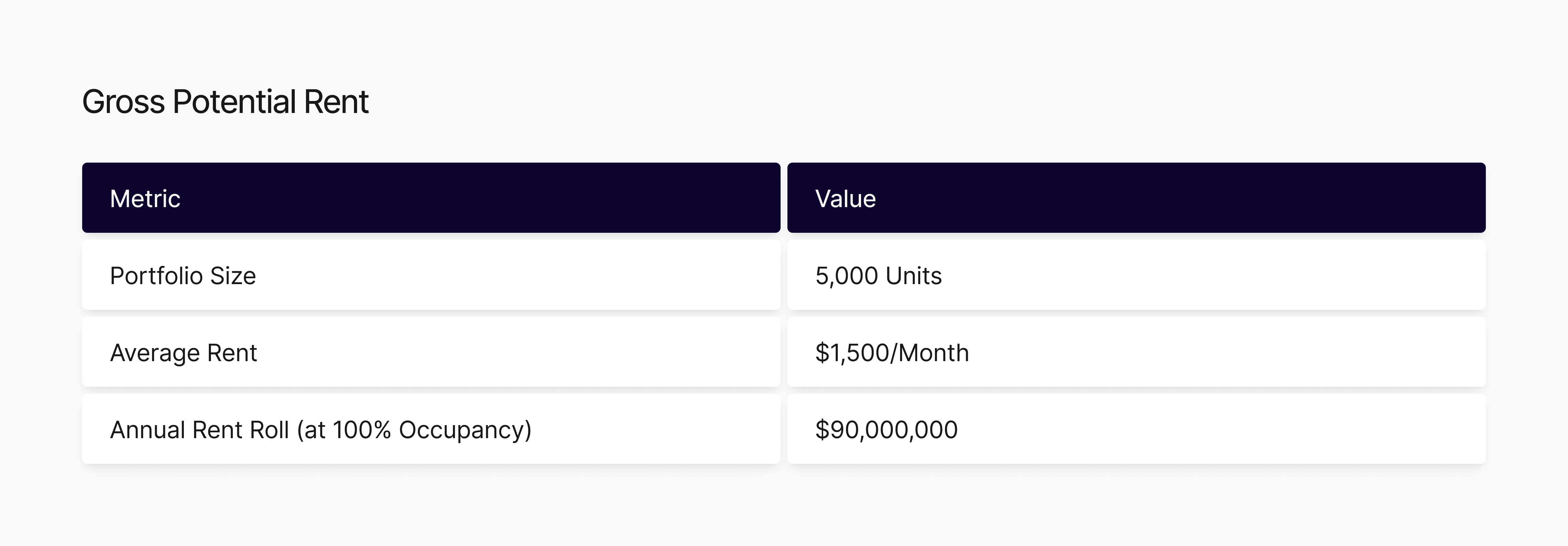
These figures aren’t exhaustive or completely representative, but should help you get a feel for what kind of revenue you’re already losing out on by neglecting to deploy AI products. By the end, you'll have a clear picture of what inaction actually costs… and why there’s no better time to get started with EliseAI than the present.
.svg)

Cost of Inaction #1: Wasted Marketing Spend
You already know what you're paying for leads, and it’s probably more than you’d like to be spending. ILS fees, Google ads, paid posts on platforms like TikTok and Instagram, all tracked and budgeted for down to the penny. What's harder to see is how much of that spend is effectively wasted before a prospect ever gets a response.
EliseAI mystery shopped over 10,000 multifamily properties in early 2025 to help provide benchmarks to the marketing and leasing teams who use our Marketing ROI and Multitouch Attribution report. The finding? Roughly 30% of inquiries were never followed up with.
That means for every $100,000 you spend on lead generation, roughly $30,000 is buying you prospects who will never hear from your team. They'll move on to the next community, book a tour somewhere else, and sign a lease with a competitor who responded first.
Let's put numbers to it for our 5,000-unit portfolio:
.png)
And that's just the direct waste. It doesn't account for the conversion lift operators see when they deploy LeasingAI to ensure every lead gets an immediate, consistent response, day or night, in 30 seconds or less. No friction, just tours scheduled around the clock.
What’s particularly impactful is the fact that this marketing spend turnaround isn’t a theoretical proposotion—Kittle Property Group reduced their overall marketing spend by 40% after implementing the LeasingAI product. Chris Fields, Vice President of Marketing and Corporate Communications, and his team didn’t have to cut channels or abandon new initiatives to do so, but instead were able to scale back spend once they started converting a higher percentage of the leads they were already paying for.
So far, not implementing AI costs has an opportunity cost of roughly $150,000 per year for a 5,000 unit conventional housing portfolio due to the failure to capture approximately 30% of the leads they pay for. Let’s move onto collections performance next.


Cost of Inaction #2: Unrealized Delinquency Improvements
Revenue leakage from uncollected rent has an immediate impact on margins. Most operators are all too aware that delinquency processes are inconsistent despite the best efforts of corporate teams, relying on manual outreach that depends on whether your site teams have bandwidth, follow-up cadences that vary property to property, and residents who know that a missed call from the leasing office doesn't come with consequences.
The math here is unforgiving. For our 5,000-unit portfolio, you're posting $7.5m in monthly rent charges. Incremental changes in collection rates (or, in our case, the failure to make those small movements) translate to big dollars.
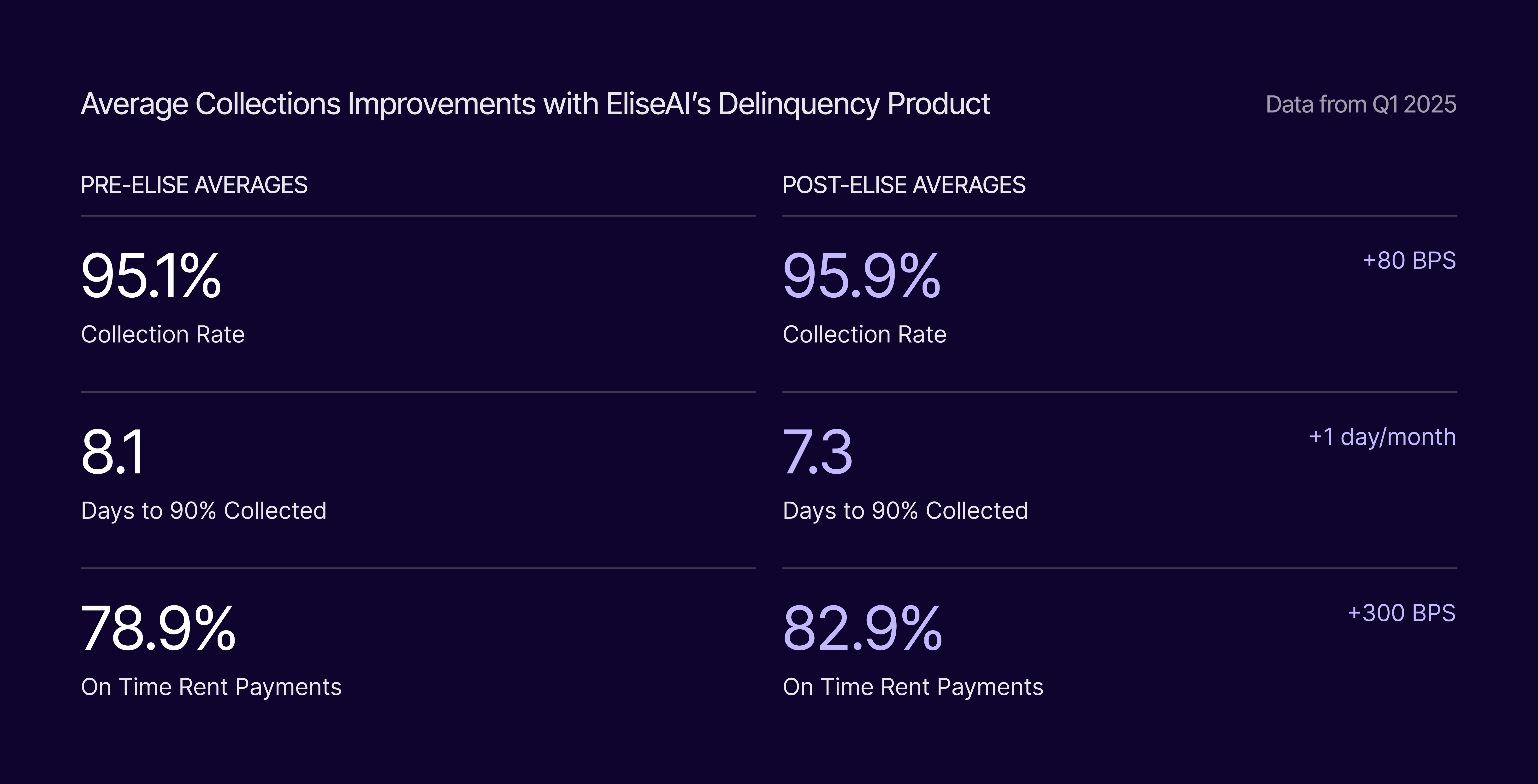
EliseAI clients see, on average, an 80 basis point improvement in overall collection rates and a 300 basis point improvement in on-time collection rates. According to our internal benchmark data, that takes the average portfolio from 95.1% to 95.9% collected. Here's what that looks like:
.png)
That's $720,000 per year from a less-than-one-percent improvement in collection rate. And it doesn't factor in the acceleration effect—EliseAI clients collect each dollar an average of 1 day faster, improving cash flow and keeping operating accounts well funded.
The difference comes down to consistency. Your onsite teams have dozens of competing priorities. They can't send a payment reminder at 7 AM, follow up at noon, and escalate at 5 PM without fail… but AI can. That way, your onsite teams can focus on the resident experience, while automated AI reminders play the “bad guy.”
Our running total: the cost of inaction is now up to $870,000 per year for a 5,000-unit portfolio, and we haven't touched occupancy yet. Starting to see how it might in fact have a higher opportunity cost not to deploy EliseAI than to find room in the budget and roll it out?
Cost of Inaction #3: Vacancy Loss
This is where the numbers get serious.
Many leasing teams accept the reality that their conversion rates are not perfect, chalking up the falloff to "unqualified leads" or "tire kickers”, but our data tells a different story.
What EliseAI benchmarks show is that the problem generally isn’t lead quality, but response time and follow-up consistency. When a prospect inquires at 10 PM, they're not waiting until morning to finalize their list, but instead booking tours at communities that respond immediately. And what operators respond around the clock? AI-powered ones. Every hour of delay is a prospect lost to the competitor who picked up faster, and the AI agents that enabled them to do so.
Last year, we partnered with ALN Apartment Data to quantify this effect at the portfolio level. The findings proved our hypothesis around speed-to-reply and response consistency: EliseAI-enabled properties outperformed larger market downturns, maintaining occupancy rates while other communities fell by 2% on average.
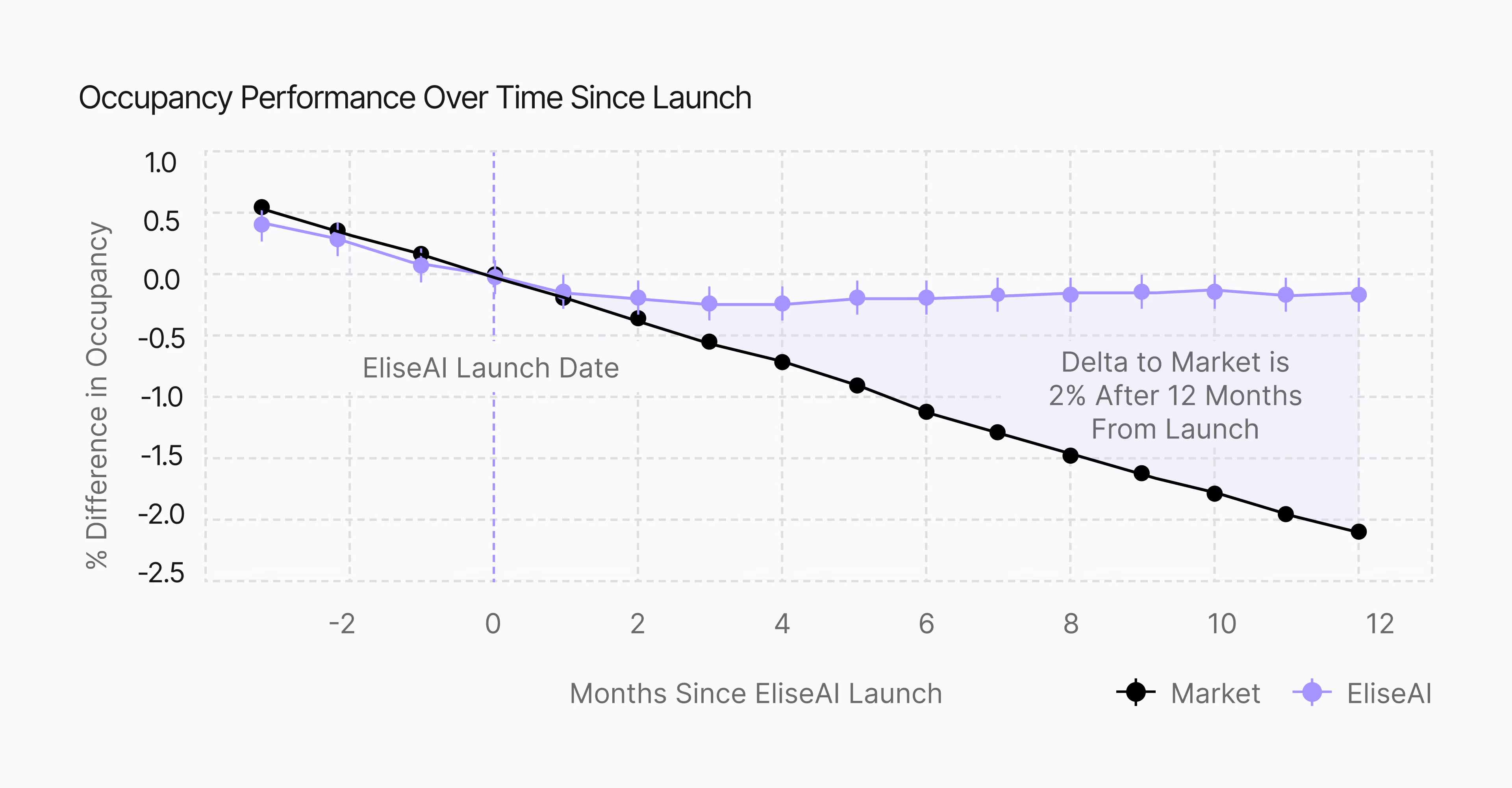
Let's use this to do some math: if our 5,000 unit non-EliseAI portfolio and a similar 5,000 unit portfolio in the same set of markets both started at 93% occupancy on January 1, the non-EliseAI powered portfolio would gradually fall to 91% occupancy over the course of the year. Each month, the occupancy rate would tick slightly down, slowly bleeding revenue compared to the EliseAI portfolio that held steady at 93%.
For month one, both would collect $6,975,000. By June, the EllseAI-powered portfolio would still collect $6,975,000 at a 93% occupancy rate, whereas the non-AI powered community would fall to 92% occupied—leading to $6,898,275 in collections. By December, the non-EliseAI portfolio would be down to 91%, and $6,825,038 in collections.
Overall, the EliseAI-powered assets would have collected $83,490,750 at a steady 93% occupancy rate, whereas the non-EliseAI assets would've collected a total of $82,720,013—a delta of $770,738.
Our running total: $$1,640,738 per year as the cost of inaction for a 5,000-unit portfolio.
Stop Leaving Money on the Table
Let's tally it up.
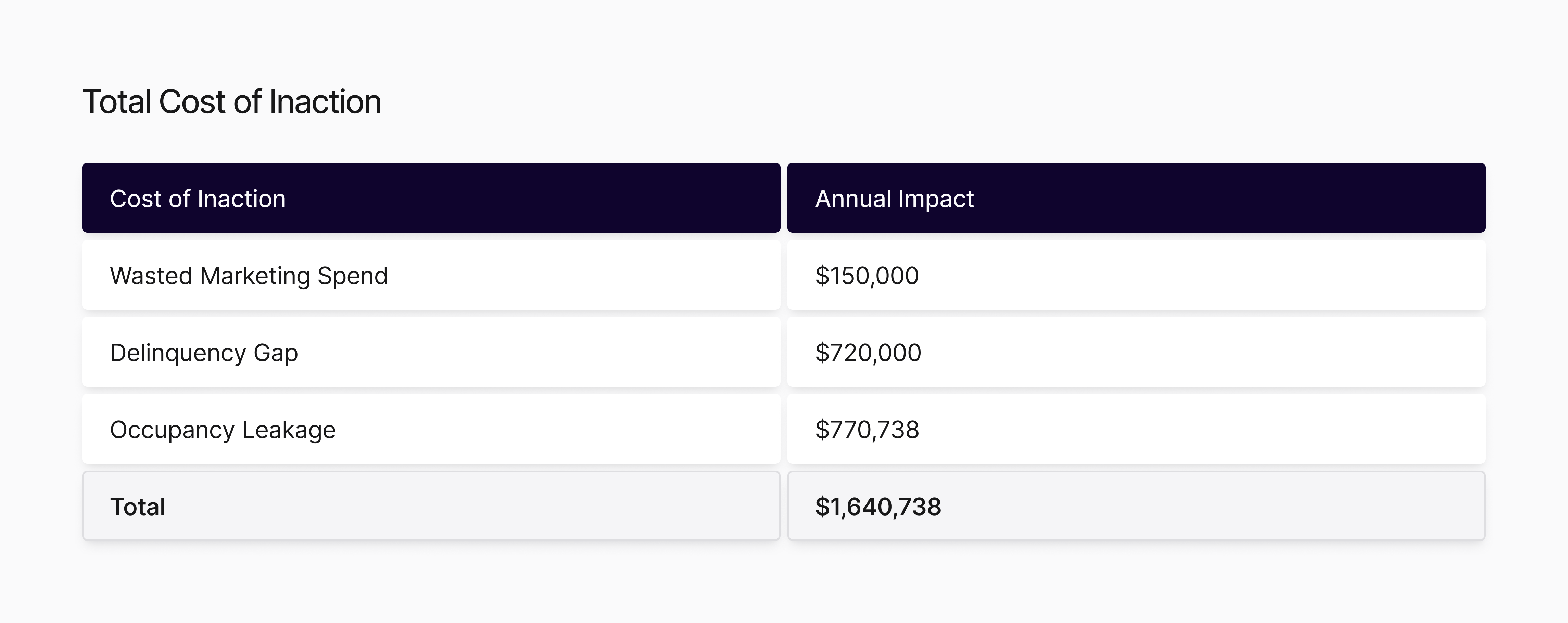
That's $1.6 million per year for a 5,000-unit portfolio. And these are conservative estimates, seeing as we haven't factored in labor efficiencies, tech stack consolidation, or the compounding effect of improved resident retention. We also have whitepapers on the point solutions EliseAI helps you eliminate, as well as a collaborative piece with Grace Hill that conclusively demonstrates the improvements AI drives on resident sentiment, if you’re looking for more data points that articulate the cost savings from AI.
All this goes to say, the question you should be asking was never "Can we afford AI?" The question is how long you can afford to operate without it.
If you're ready to see what these numbers look like for your portfolio, we're happy to do the math with you. Get in touch with us below to discuss how EliseAI can help you hit your occupancy and NOI goals in 2026 and beyond.