


Healthcare conversations rarely happen in neat, predictable turns. Patients pause to look for an insurance card. They interrupt with a follow-up question. They change their minds, ask a family member for help, or explain their situation while background noise fills the room.
Until now, most voice AI systems have struggled to handle those moments naturally. That dynamic is changing with GPT-Live-1, OpenAI’s new full-duplex voice model.
EliseAI has been working with OpenAI as an early design partner to bring these capabilities to healthcare voice experiences, starting with the conversations that matter most to patients and providers.
.svg)

Voice AI that works more like a real conversation
Traditional voice AI systems typically rely on separate technologies chained together: a speech-to-text model transcribes what a person says, a reasoning model generates a response, and a text-to-speech model speaks that response aloud. Every handoff adds latency and creates another chance to lose timing, context, or the natural rhythm of the conversation.
That chain makes many voice agents feel like walkie-talkies. You talk. It waits for you to finish. Then it responds. If it mistakes a pause for the end of your thought, it cuts you off. If it waits too long, you get a long silence.
Unlike chained approaches, OpenAI’s GPT‑Live‑1 handles listening and speaking in a single model. It can hear you while it’s talking and respond to an interruption as it happens.
Across OpenAI's evaluations, the model improves Full Duplex Bench performance by 30 percentage points over the previous generation, with large gains in conversational latency, interruption handling, background noise management, and reliability during longer interactions.


From answering calls to completing healthcare tasks
Healthcare access is often limited by the administrative systems surrounding care. Patients may spend long periods on hold, call after business hours, or give up after an unsuccessful attempt to reach the practice.
Front desk teams are expected to manage high call volumes while coordinating provider schedules, insurance requirements, referrals, authorizations, patient records, and follow-up tasks.
The challenge is not simply answering the phone. A useful healthcare voice agent needs to understand the patient’s intent, follow the practice’s rules, take action in connected systems, and know when a request requires staff or provider involvement.
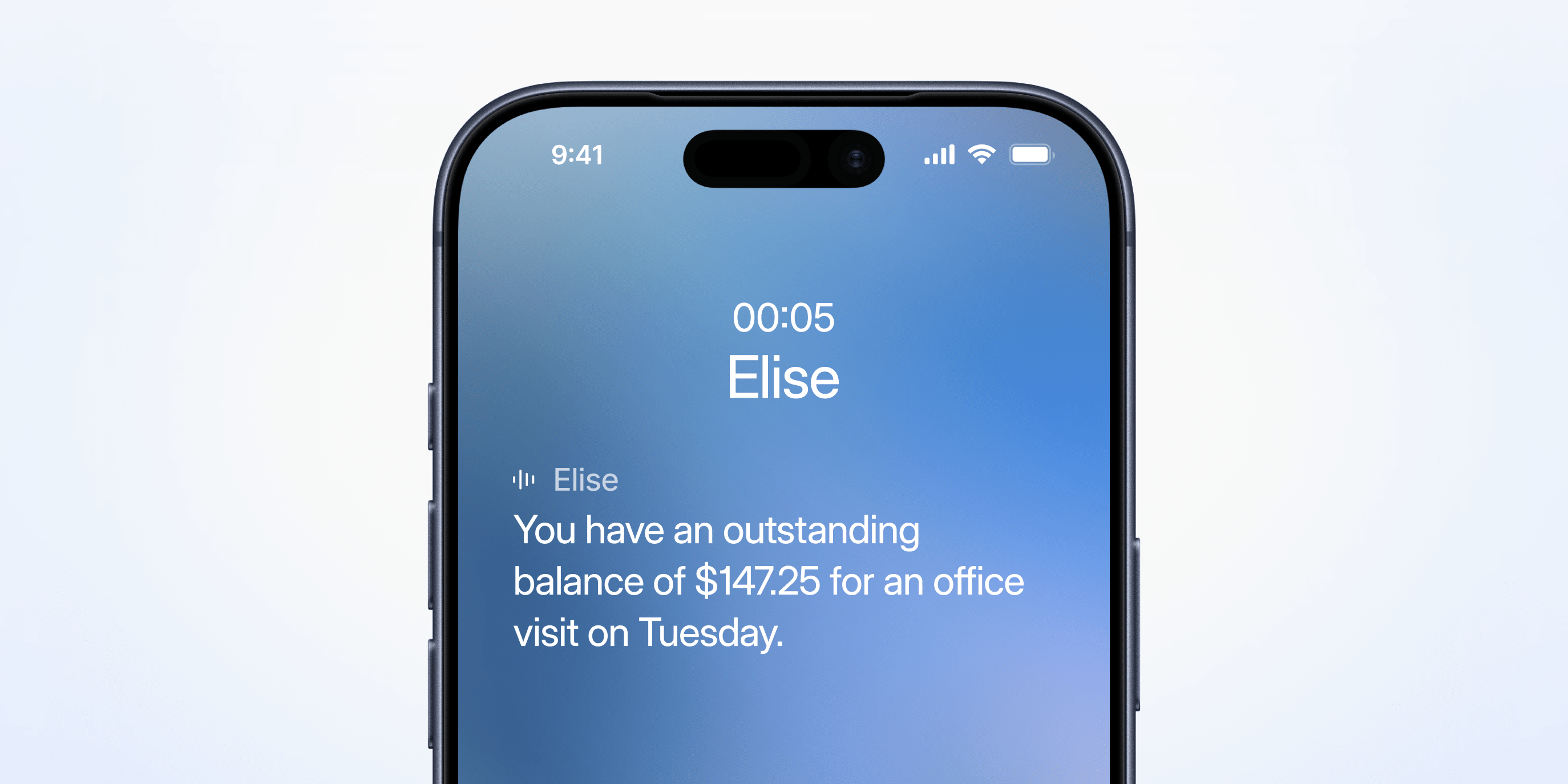
If a patient calls to schedule an appointment, EliseAI seamlessly identifies the reason for the visit, apply provider and appointment type rules, check availability, verify relevant information, and book the appointment directly in the practice’s EHR. Similarly, if a patient has a question about a balance, EliseAI can explain the amount due using available information, answer common questions, and send a secure payment link when appropriate.
EliseAI harnesses GPT‑Live‑1’s conversational voice layer to connect patient conversations with the workflows practices use to book appointments, follow up, and help patients navigate care.
The next generation of healthcare voice automation
With GPT‑Live‑1, conversations can be faster, more flexible, and more natural while connecting to the systems and workflows healthcare organizations rely on.
EliseAI is bringing those capabilities to healthcare first, where every conversation has a purpose: enabling a patient to get care, helping a staff member complete a task, or empowering a practice to keep its operations moving forward.