


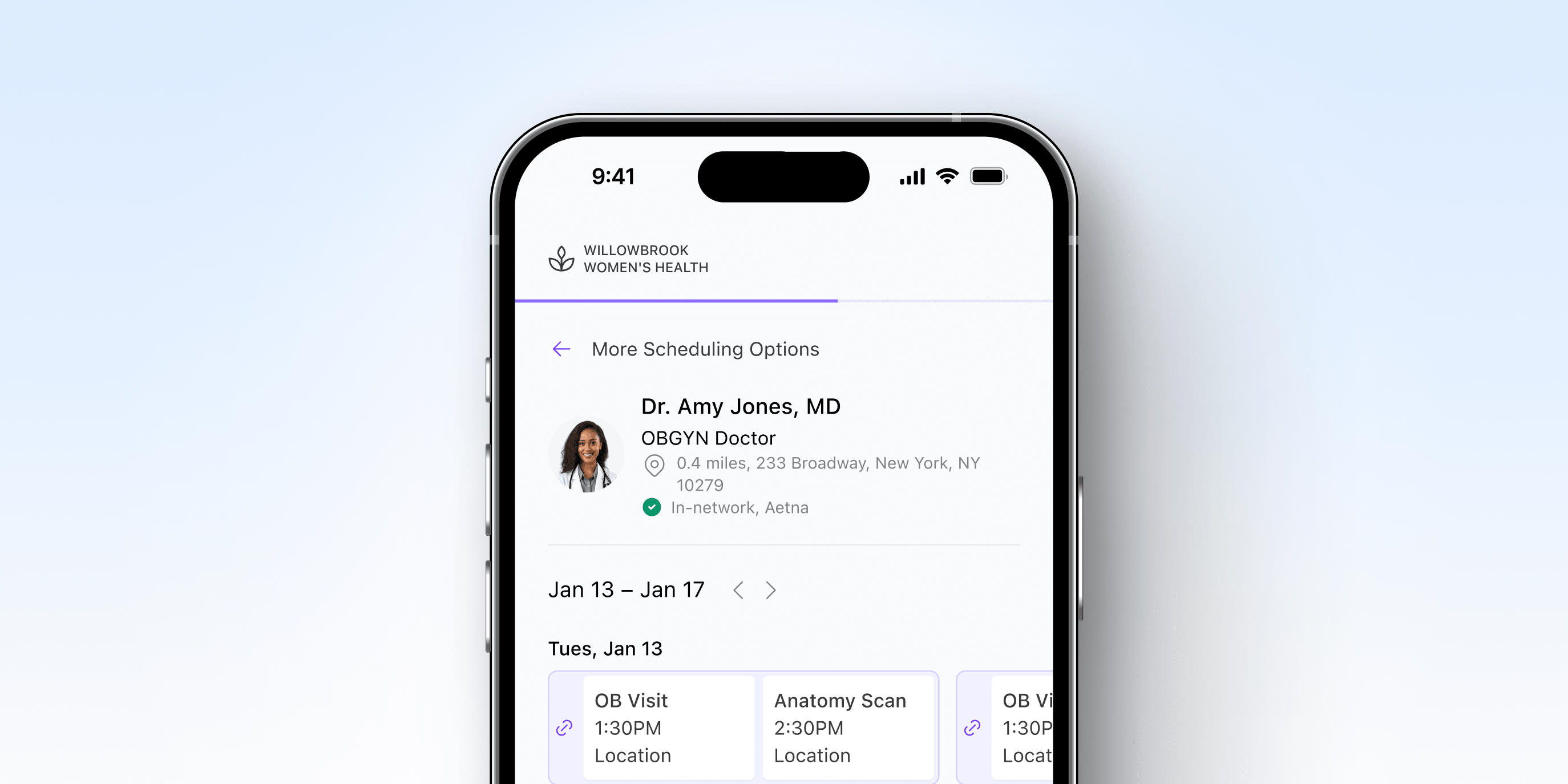
For decades, OB reimbursement has worked the same way: provide prenatal care, deliver the baby, handle the postpartum visit, collect a single bundled payment. One code. One claim. One check.
Starting January 1, 2027, that model is gone.
The AMA CPT Editorial Panel has approved the deletion of 16 global obstetric codes, the revision of 6 existing codes, and the introduction of 12 new maternity care codes. Instead of bundling months of care into a single payment, practices will bill prenatal and postpartum visits individually using E/M codes with a TH modifier to indicate the visit is pregnancy-related.
The rationale is sound. The traditional global OB billing model was built for a simpler version of prenatal care, with fewer screenings, fewer chronic conditions, and far less patient counseling.
But for practice leaders, one implication towers above the rest: under per-visit OB billing, every missed prenatal appointment is revenue you will never recover.
.svg)

What the 2027 OB Billing Changes Mean for Prenatal Visit Revenue
Under global billing, patient attendance was a clinical concern but not a financial one. Whether she attended 8 visits or 14, the practice collected the same bundled payment at delivery.
Per-visit billing eliminates that cushion. Each prenatal encounter becomes its own claim. A no-show doesn't get billed. A cancelled reschedule disappears from the revenue line entirely.
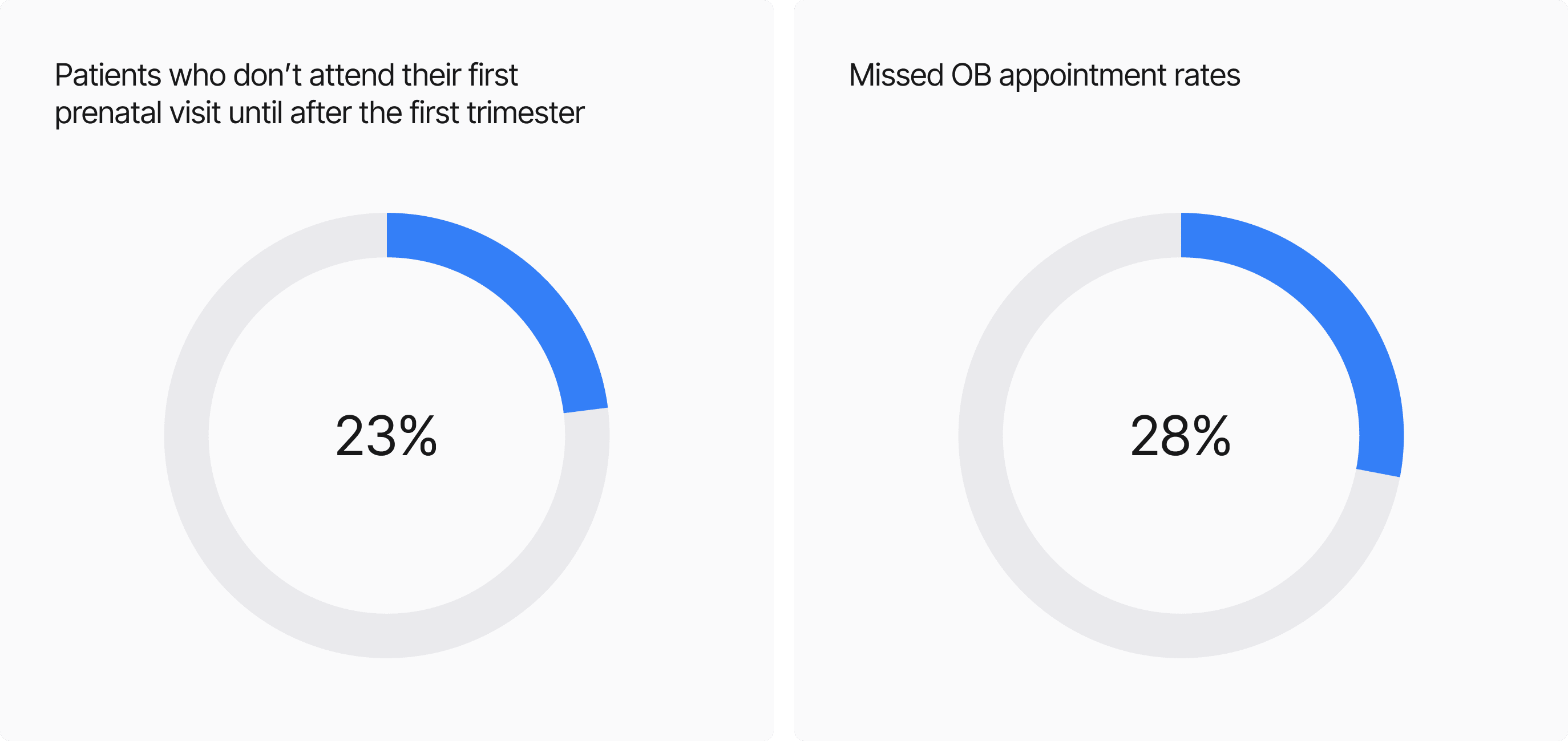
According to ACOG, 23% of patients don't attend their first prenatal appointment until after the first trimester, and nearly half don't receive all recommended services on time. Research published in PubMed has documented missed OB appointment rates as high as 28% in clinics serving lower-income populations.
Under global billing, those gaps never appeared on a claims report. Starting in 2027, every one of them will.


Why OB Scheduling Volume Makes This Impossible to Solve Manually
The standard ACOG prenatal visit cadence for an uncomplicated pregnancy runs 12 to 14 visits. A practice managing 200 active OB patients at different gestational ages is looking at roughly 2,800 scheduling interactions per year for prenatal care alone.
Patients call to reschedule after hours. They call when every line is ringing. They call during lunch when your front desk is down to one person. When a pregnant patient can't get through, she doesn't usually try again. She just misses the visit.
Under global billing, that was an operational headache. Under per-visit billing, it's direct revenue loss, repeated across hundreds of patients and thousands of visits.
No front desk team, no matter how good, can answer every OB scheduling call instantly, around the clock, 365 days a year. That's not a staffing failure. It's a structural limitation that per-visit billing is about to expose.
How EliseAI Keeps Every OB Patient on Her Prenatal Visit Schedule
EliseAI gives women's health practices the scheduling infrastructure that per-visit OB billing demands. Rather than relying on front desk availability to manage thousands of prenatal scheduling touchpoints, EliseAI automates the entire patient communication cycle, from first booking through final postpartum visit.
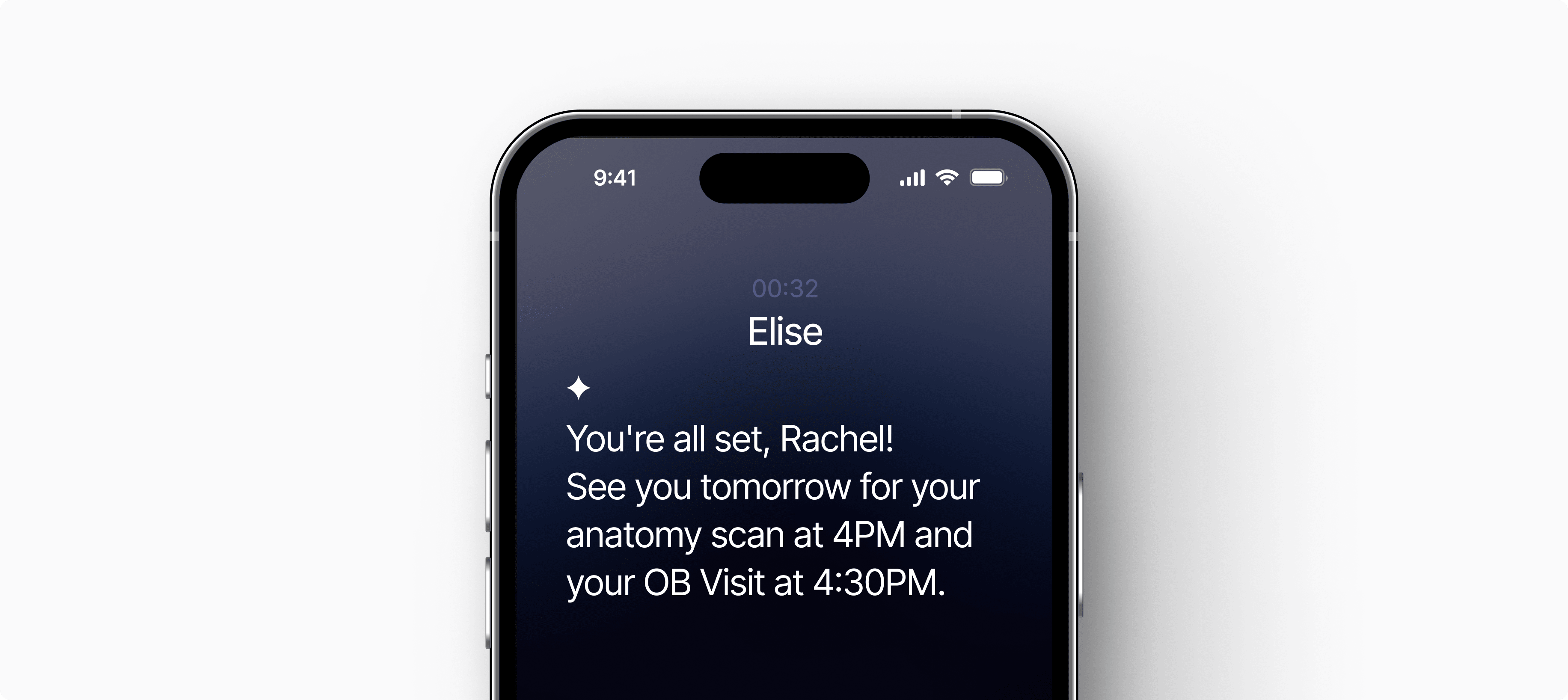
Voice AI that answers every call, any time. When a patient at 30 weeks needs to move her Thursday appointment, EliseAI handles the reschedule on the spot, whether she calls at 10am or 9pm. The visit stays on the books. The revenue stays intact.
Online self-scheduling that lets patients book on their own terms. Not every patient wants to call. EliseAI's online scheduling gives OB patients a direct way to book, reschedule, or confirm prenatal visits whenever it's convenient for them, removing another layer of friction that leads to missed appointments.
Automated reminders and confirmations that keep patients on track. Every scheduled prenatal visit is reinforced with automated outreach, so patients aren't relying on memory alone to show up for their 24-week appointment three weeks from now.
Outbound recall for patients who fall off schedule. This is where per-visit billing creates a completely new financial incentive. Under global billing, there was no revenue reason to chase down a patient who missed her 32-week visit. Under per-visit billing, that missed visit is an unbilled encounter. EliseAI proactively reaches out to patients who fall off their visit cadence to get them rescheduled, turning what used to be a clinical follow-up into a revenue recovery workflow.
Insurance verification and intake handled before the visit. Per-visit billing also means more individual claims, which means more opportunities for denials if insurance information is outdated or incomplete. EliseAI handles insurance verification and intake ahead of each appointment so the claim is clean before the patient walks in the door.
Direct EHR integration. EliseAI works with Athenahealth, ModMed, NexTech, Nextgen, and eClinicalWorks, so every scheduling change, confirmation, and patient interaction is reflected in your system immediately with no double entry.
How to Prepare Your OB Practice Before January 2027
The AMA released the new maternity codes early because the implementation lift is significant. Don't wait until Q4 2026.
Audit your OB visit completion rates. How many active OB patients complete the full recommended visit cadence? Where are the drop-off points? If you don't know, you can't forecast the revenue impact of per-visit billing.
Stress-test your phones. How many OB calls go unanswered at peak hours? Are after-hours calls captured at all? If patients are falling out of their visit cadence because they can't reach you, that scheduling gap is about to show up directly on your revenue reports.
Model your revenue exposure. Under global billing, a patient who attends 10 of 14 visits generates the same revenue as one who attends all 14. Under per-visit billing, those four missing visits are four unbilled encounters. Multiply that across your full OB panel.
Get your scheduling infrastructure ready before the billing changes hit. The practices that protect their OB revenue through this transition will be the ones where every call is answered, every reschedule is handled instantly, patients can book online on their own time, and no one falls off their visit cadence without follow-up. That's what EliseAI does, and practices already using it will have a significant head start when per-visit billing takes effect.