


Ready to Streamline Your Operations?
Book a demo to see how EliseAI automates communication, reduces workload, and delivers real results.

Increase in Post-Centralization Renewal Rates
Increase in Post-Centralization Collection Rates
Time to 95% Collected
Urby is a hospitality-driven multifamily developer and operator founded in 2014. Urby currently operates seven properties across Dallas, DC, Philadelphia, Harrison, Journal Square, Newark, and Staten Island, with properties in development in Jersey City and Hoboken. Today, their total footprint of active and in-development assets spans over 3,600 units.
What sets Urby apart from its peers is a company culture that blends the scrappiness of a startup with the intentionality of a lifestyle brand. Urby prides itself on creating a working environment where autonomy is the norm, creativity is encouraged, and micromanagement is rare. That same ethos extends to the resident experience, where the Urby team prioritizes in-person connections, warm hospitality, and a level of personal attention that most renters don't expect from their management company.
As Urby's portfolio has grown across multiple states and property types, so has the challenge of delivering that experience consistently at every asset. By design, each Urby community has its own look, feel and local identity. But at the same time, leadership recognized that the foundational standard of service ALSO needed to be efficient and scalable. It was this pursuit of increased consistency that led Urby to begin exploring a centralized operating model, and the AI-powered technology required to enable it.
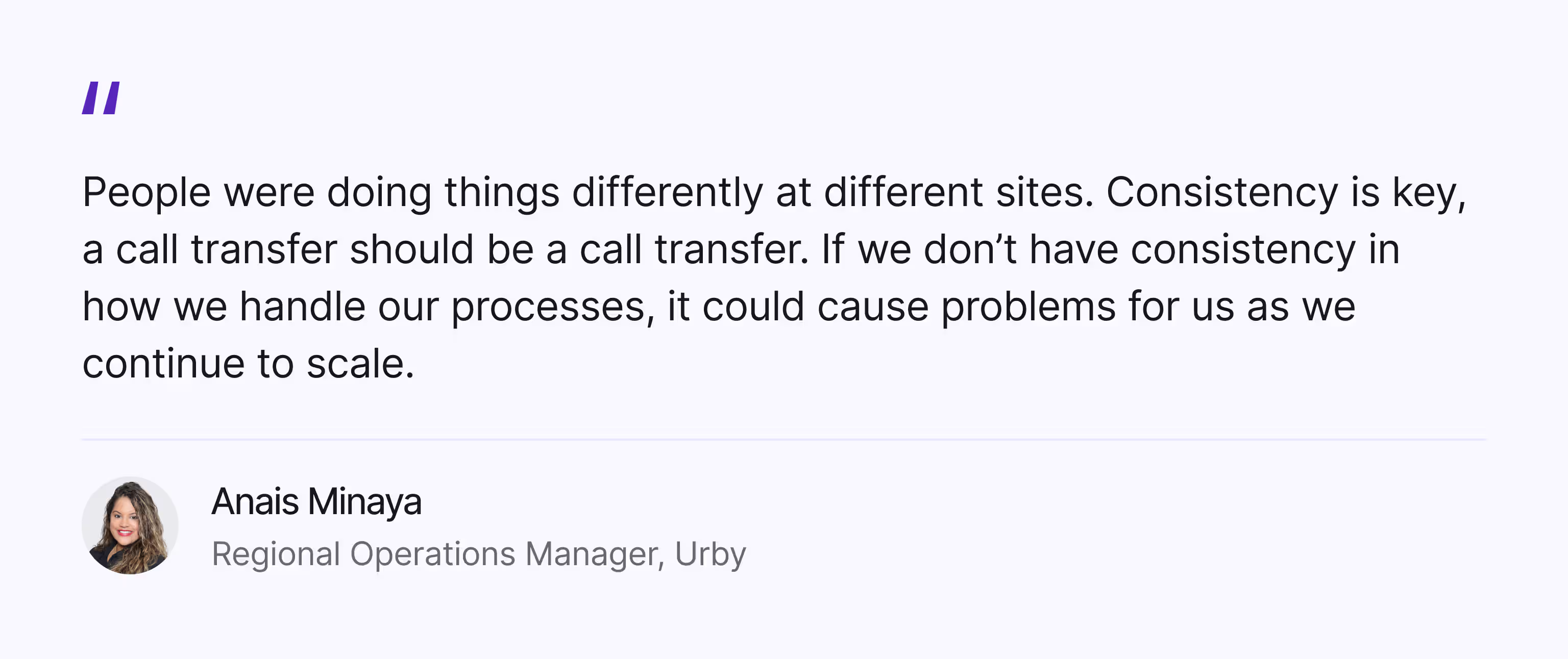
Before embarking on their AI + centralization journey, each Urby property had its own way of doing business, including unique SOPs and workflows. Processes that would have ideally been standardized, like call transfers, renewal outreach cadences, and delinquency follow-ups, varied from asset to asset, creating inconsistencies that were difficult to track, and even harder to correct from HQ. While this is a challenge that naturally comes with portfolio growth, it created room for error that Urby’s leadership team needed to address proactively.
The operational pressure to embrace standardization went deeper than simply eliminating differences in how routine tasks were managed. One realization the Urby team came to was that their onsite teams were stretched thin across a patchwork of overlapping responsibilities that would be better divided and assigned to specialized teams. This, in turn, opened the door for fundamental staffing shifts that would reassign disparate tasks to the right places.
Leasing agents and property managers were buried under a relentless volume of repetitive resident inquiries, pulling them away from the high-impact work, like in-person touring, that actually moved the business forward. The volume problem was especially acute during lease-ups, where phones rang nonstop and every missed call represented wasted marketing dollars. Property managers came back from weekends to inboxes of 100+ emails, the vast majority of which were the same handful of binary questions, like “can I have a dog in my unit” asked over and over. As a result, the work that required real expertise and human judgment got lost in the shuffle more frequently than the Urby team wanted.
Urby needed a way to protect the unique characteristics and identities of their individual assets while also building an operating model that could offer consistent, reliable service across a growing portfolio. The answer would require both a new, centralized organizational structure, and purpose-built technology designed to enable the model. With that in mind, Urby decided to partner with EliseAI to make their centralized vision a reality.
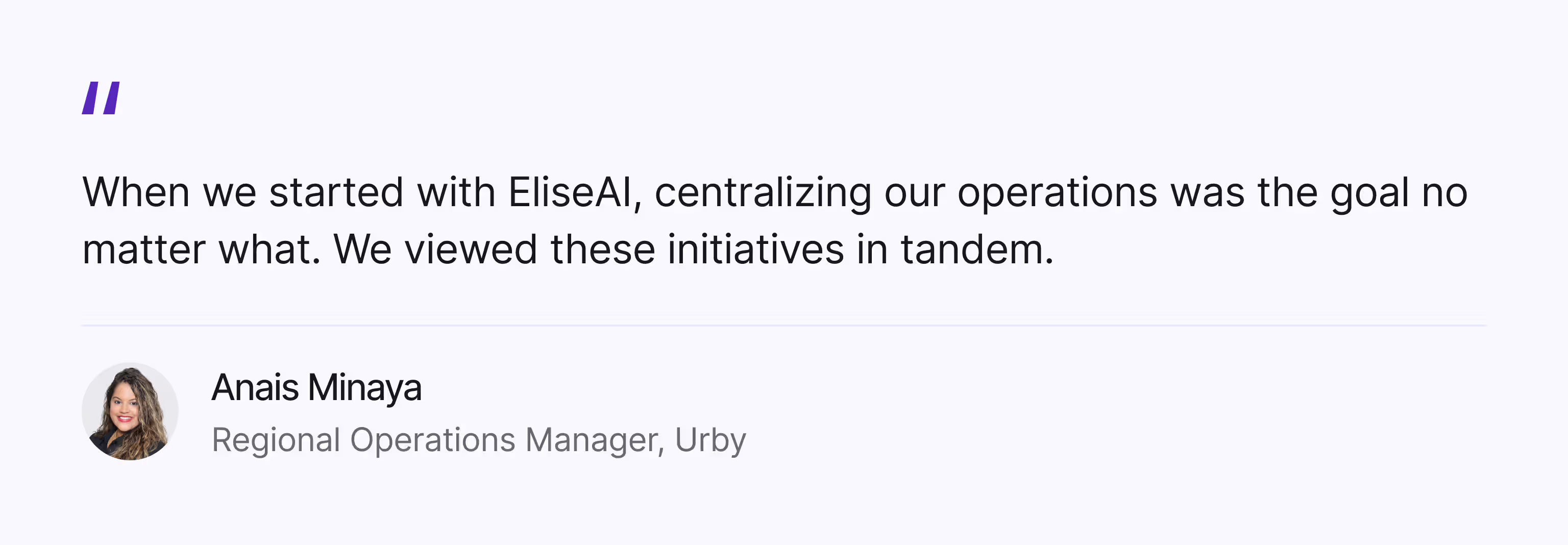
After getting their team comfortable working alongside EliseAI, the Urby team quickly looked to stand up a centralized model to improve property performance. EliseAI would handle the volume of repetitive communications that kept onsite teams underwater and correctly route work to the right specialists, while a newly formed centralized team would take ownership of the specialized work that required consistency and cross-portfolio visibility. Rather than starting with leasing, where Urby feels they have a differentiator in their in-person touring strategy, the team focused on back office functions first, including renewal and delinquency management, as well as maintenance coordination.
In order to lay the groundwork for the centralization effort, Urby’s leadership team went through every onsite role line by line to map which responsibilities would remain onsite and which would shift to Centralized Property Specialists at HQ. New measures of success were built for each restructured position. One of the first people to move into a centralized role was Stephanie Boothe, a Property Manager with over five years at Urby and hands-on experience across four of its assets. Her existing relationships with onsite teams, many residents, and familiarity with each building's operations made the transition seamless, and signaled to other onsite team members that centralization meant new avenues for career growth, not headcount reduction.
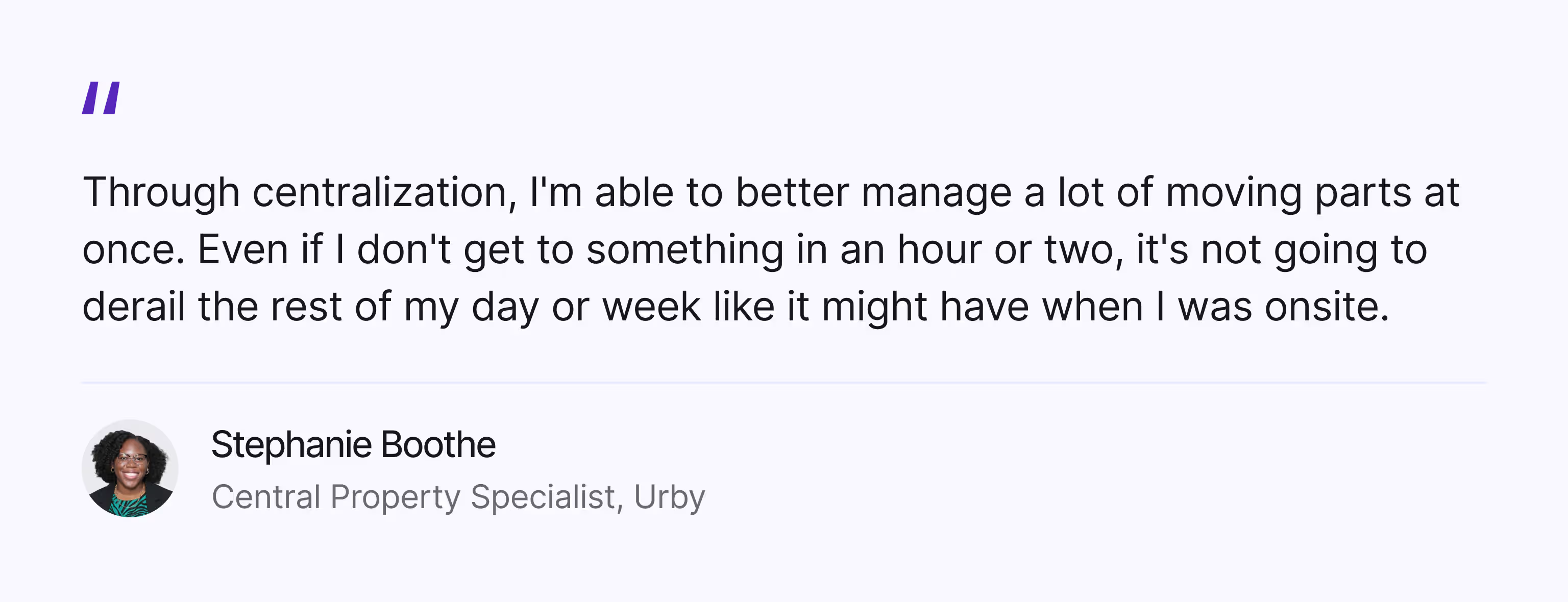
With EliseAI managing routine prospect and resident communications through the LeasingAI, Delinquency, Renewals, Maintenance, and VoiceAI products, Urby’s centralized team are able to operate in a more structured, well orchestrated manner than they could onsite. The team has built structured weekly rhythms around renewal strategy, outreach windows, and task reviews, which would have been impossible to sustain while fielding constant interruptions at the front desk.
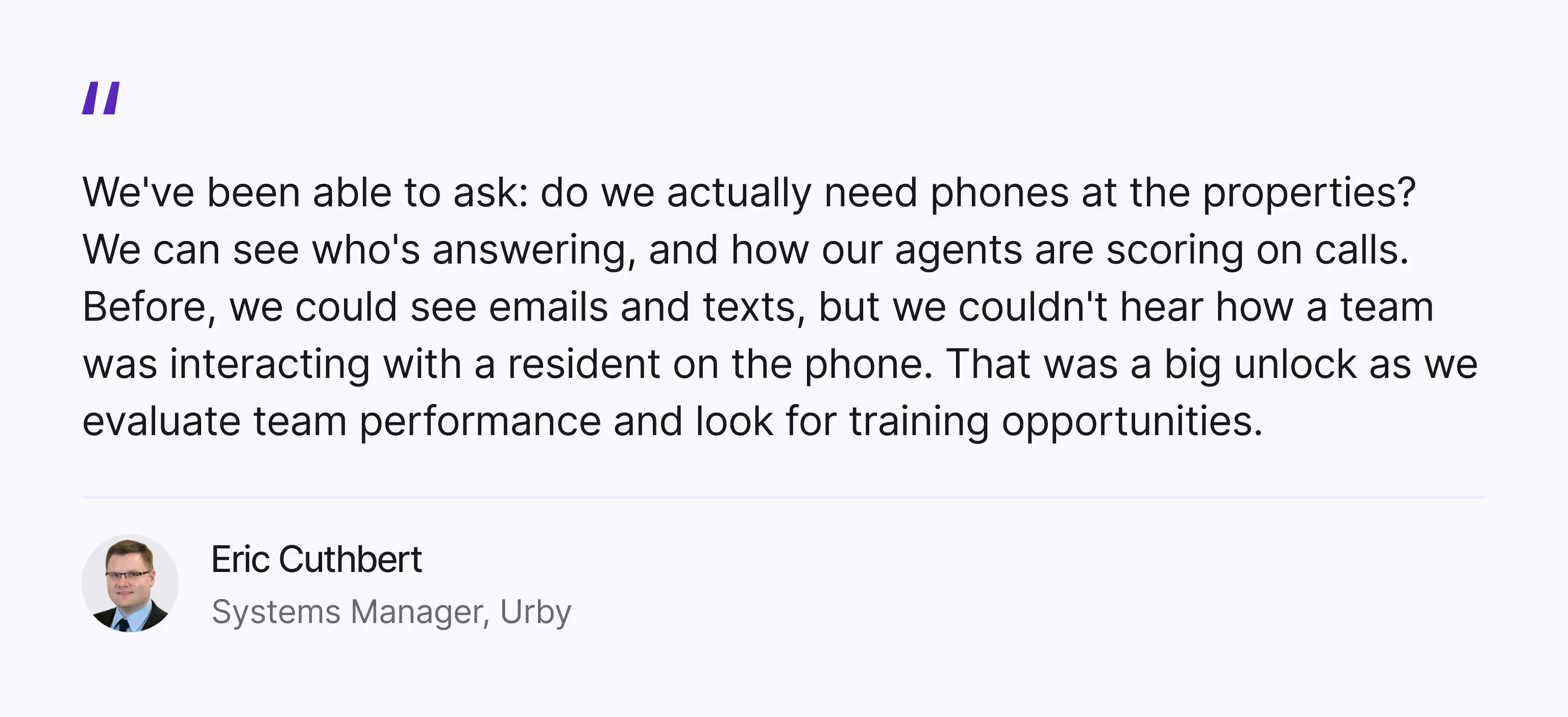
The EliseCRM platform has also given Urby operational visibility it never had before. The Executive Insight Dashboard allows the team to track tasks and performance per agent, monitor NTVs, and review AI conversations with residents and prospects. The centralized team now routes all calls through EliseCRM rather than traditional property phones, unlocking call recording, call scoring, and performance data for the first time. With email, phone, and text unified in a single platform, leadership has a clear line of sight into how residents and prospects are being engaged across every channel at every asset.
Within three months of centralizing resident operations with EliseAI, Urby has seen measurable improvement across the metrics that matter most to their business.
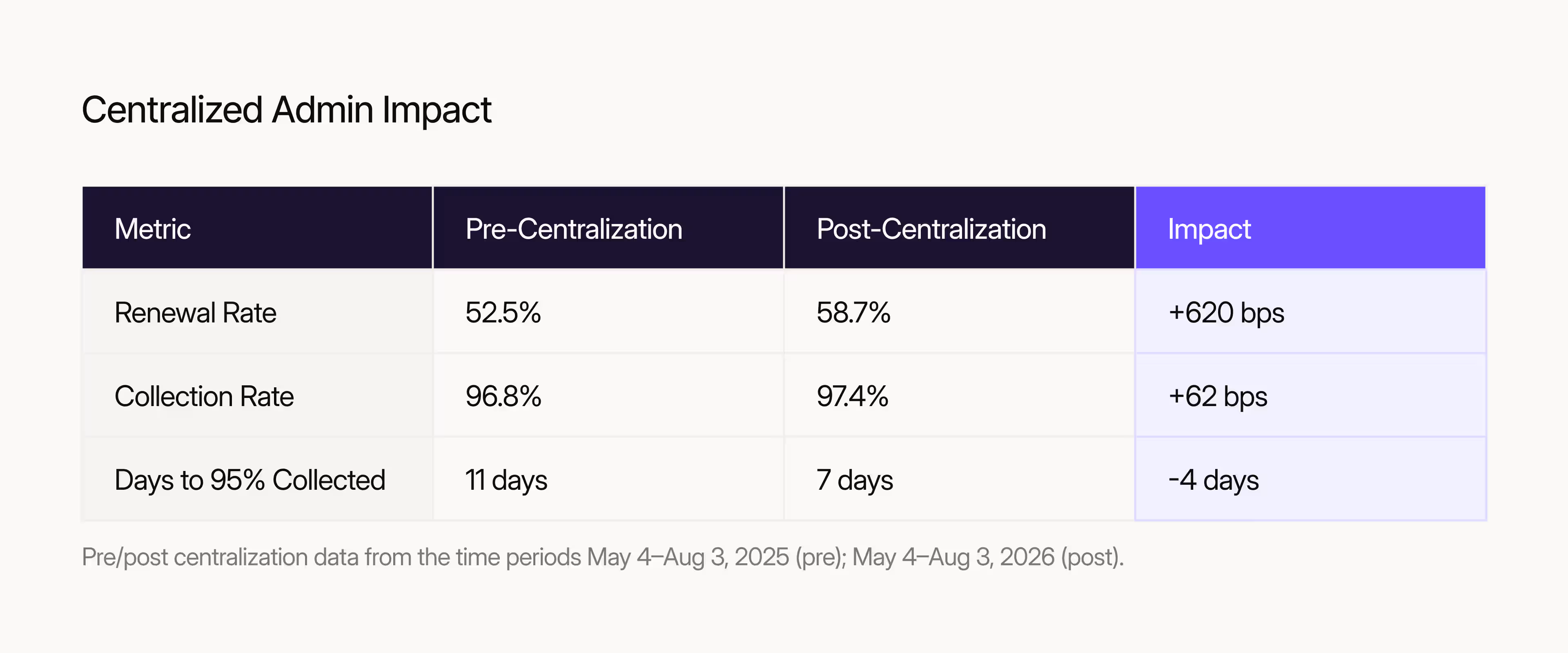
On the centralized property specialist front, Urby’s EliseAI-powered model has helped boost renewal rates by 620 basis points. Today, Urby’s centralized team processes a higher volume of renewals than ever before at a significantly better conversion rate than their pre-centralization benchmarks. This is a result of their newly sharpened focus on outreach cadence, offer auditing, and cross-property renewal strategy, all of which wasn't possible when these tasks were spread across individual onsite teams. Plus, EliseAI’s Renewals product keeps communications moving seamlessly, ensuring no resident falls through the cracks.
Urby’s delinquency management workflows have also seen notable improvements. With EliseAI's Delinquency product handling structured initial outreach and the centralized team managing escalations, Urby now reaches 95% collected four days faster on average with a 62 basis point increase in overall collections.
Beyond the headline metrics, Urby has realized significant operational efficiencies since launching the centralized model. A few team members have left the company since the launch without having their roles backfilled, with EliseAI + centralized services stepping in to pick up the slack. Urby has also terminated its contract with a third-party emergency maintenance vendor, with EliseAI now handling emergency work order creation directly.
In spite of all these impressive results, Urby is still in the early stages of its centralization journey. The management-side functions that have been centralized so far are realizing clear results. For Urby, it’s abundantly clear that AI-powered centralization is a powerful way to uphold high brand standards and offer more opportunity for value-driven strategizing that can take them far as they work to scale a differentiated portfolio.

Anais Minaya came to residential property management through hospitality sales. Before joining Urby, she held sales management roles at Starwood Hotels, Morgans Hotel Group, W Hoboken, and the Shelborne South Beach. She holds a B.S. in Business Management from Rutgers University. At Urby, Anais oversees regional operations across the portfolio and was one of the leads on designing the company's centralized operating model, working to standardize processes across assets while preserving the identity of each property.

Eric Cuthbert manages financial operations and technology systems across Urby's portfolio from the company's Hoboken headquarters. In the centralization effort, Eric has owned the technical integration of EliseAI into Urby's day-to-day operations, including the migration of property-level phone systems to EliseCRM routing and the buildout of performance analytics through the Executive Insight Dashboard.

Stephanie Boothe attended Franklin & Marshall College and started her career as a Community Associate at WeWork, where she supported workspace operations for startups and enterprise companies. She joined Urby as a Leasing and Renewal Coordinator at Jersey City Urby, then moved into property management roles across four assets — Jersey City, Journal Square, Stamford, and Harrison — including as part of the opening team for Journal Square. When Urby built its centralized operations function, Stephanie was the first team member hired into the new structure.

Gwen Sparkman previously served as a Senior Manager at WeWork, where she was part of the Tri-State community leadership team managing a portfolio of locations across Manhattan. She joined Urby as a General Manager before moving into the Chief of Staff role. Gwen is an alumnus of Harvard Business School and has spoken at DisruptHR NYC. She led the assembly of Urby's centralized operations team, including recruiting several of its members from within the existing organization.
Book a demo to see how EliseAI automates communication, reduces workload, and delivers real results.